
 Contact
 Hoe winkelen bij ons werkt
Bezorging
Winkelgids
 Duits
Duits
 172 b
172 b
Retourneren binnen 30 dagen
Klanten kochten ook










 /
/
 Gebonden (paperback)
 23.89
€
23.89
€



 /
Gebonden (paperback)
26.12
€
/
Gebonden (paperback)
26.12
€






 /
Boek
81.93
€
/
Boek
81.93
€




 /
Gebonden (paperback)
31.69
€
/
Gebonden (paperback)
31.69
€


 /
Gebonden (paperback)
8.80
€
/
Gebonden (paperback)
8.80
€


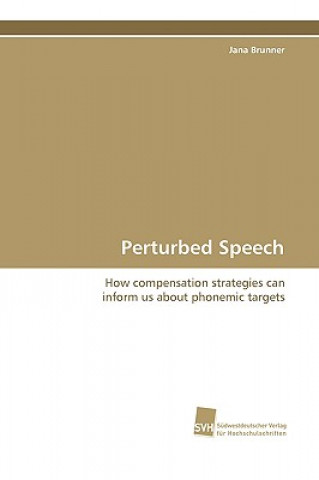
When speakers produce sounds they need to have an§"image" of a sound before they can produce it: They§need to know what the sound they are going to produce§shall be like. This "image" of the sound could§consist of articulatory and/or acoustic components.§For a sound such as /f/, for example, speakers could§have an articulatory representation such as§"constriction between lower lip and upper§incisors". However, they could also have an acoustic§representation such as "noise with a diffuse§spectrum". The study investigates whether in§perturbed speech speakers compensate with the aim to§produce the same articulatory configuration as in§unperturbed speech or the same acoustic output. If§speakers adapt towards the same articulatory§configuration this would support articulatory images§of sounds. If speakers head towards a certain§acoustic output one could assume that they have§acoustic images of sounds. The results of this§EMA-study show that during early compensatory§attempts speakers use articulatory images, later,§however, they change the articulation while focussing§on the acoustic output. Final compensation efforts§are directed towards an optimisation of the movement.


Informatie over het boek
Duits
Categorieën

Geef dit boek vandaag nog cadeau
Dat gaat heel eenvoudig
1 Voeg het boek toe aan je winkelwagentje en selecteer Als cadeau bezorgen 2 Je krijgt van ons per omgaand een voucher 3 Het boek wordt bezorgd op het adres van de ontvangerDit vind je misschien ook interessant


 /
Gebonden (paperback)
47.29
€
/
Gebonden (paperback)
47.29
€
 /
/
 Dvd
13.16
€
Dvd
13.16
€





 /
Gebonden (paperback)
59.75
€
/
Gebonden (paperback)
59.75
€


 /
Gebonden (paperback)
14.27
€
/
Gebonden (paperback)
14.27
€




 /
Gebonden (harde band)
31.29
€
/
Gebonden (harde band)
31.29
€
Hoi! Ik ben Libroamiko, je boekadviseur.
Hoe kan ik je helpen?