
 Contact
 Hoe winkelen bij ons werkt
Bezorging
Winkelgids
 Engels
 117 b
117 b
Tot 30 dagen retourrecht
Klanten kochten ook

 /
/
 Gebonden (paperback)
 25.83
€
25.83
€
 /
Boek
20.20
€
/
Boek
20.20
€





 /
Gebonden (paperback)
31.87
€
/
Gebonden (paperback)
31.87
€



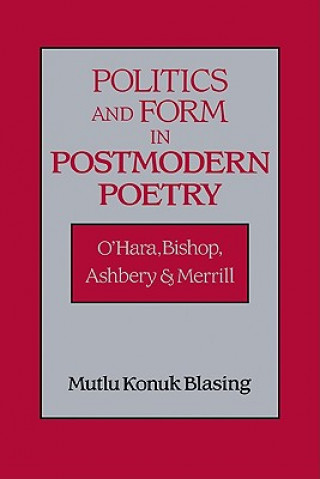
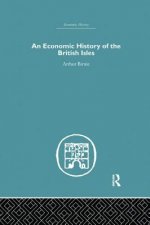
Approaching post-World War II poetry from a postmodern critical perspective, this study challenges the prevailing assumption that experimental forms signify political opposition while traditional forms are politically conservative. Such essentialist alignments of forms with extra-formal values, and the oppositional framework of innovation versus conservation that they yield, reflect modernist biases inappropriate for reading postwar poetry. Biasing defines postmodern poetry as a break with modernism's valorization of technique and its implicit collusion with technological progress. She shows that four major postwar poets - Frank O'Hara, Elizabeth Bishop, John Ashbery and James Merrill (two traditional and two experimental) - cannot be read as politically conservative because formally traditional or as culturally oppositional because formally experimental. All of these poets acknowledge that no one form is more natural than another, and no given form grants them a superior position for judging cultural and political arrangements. Their work plays an important cultural role precisely by revealing that meanings and values do not inhere in forms but are always and irreducibly rhetorical.


Informatie over het boek
Engels

Geef dit boek vandaag nog cadeau
Dat gaat heel eenvoudig
1 Voeg het boek toe aan je winkelwagentje en selecteer Als cadeau bezorgen 2 Je krijgt van ons per omgaand een voucher 3 Het boek wordt bezorgd op het adres van de ontvangerDit vind je misschien ook interessant
 /
Gebonden (paperback)
91.49
€
/
Gebonden (paperback)
91.49
€












Hoi! Ik ben Libroamiko, je boekadviseur.
Hoe kan ik je helpen?