
 Contact
 Hoe winkelen bij ons werkt
Bezorging
Winkelgids
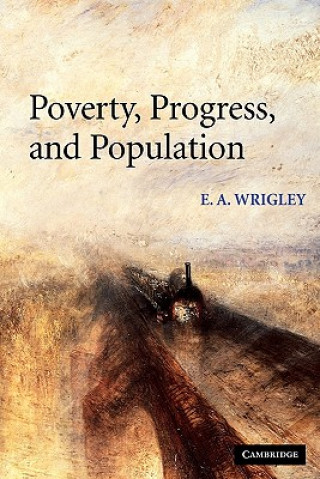
Poverty, Progress, and Population
 Engels
 109 b
109 b
Retourneren binnen 30 dagen
Klanten kochten ook

 /
/
 Gebonden (paperback)
 53.00
€
53.00
€
 /
/
 Kalender
26.44
€
Kalender
26.44
€










 /
Gebonden (harde band)
118.93
€
/
Gebonden (harde band)
118.93
€


 /
Gebonden (paperback)
38.46
€
/
Gebonden (paperback)
38.46
€



By the early nineteenth century England was very different economically from its continental neighbours. It was wealthier, growing more rapidly, more heavily urbanised, and far less dependent upon agriculture. A generation ago it was normal to attribute these differences to the 'industrial revolution' and to suppose that this was mainly the product of recent change, but no longer. Current estimates suggest only slow growth during the period from 1760–1840. This implies that the economy was much larger and more advanced by 1760 than had previously been supposed and suggests that growth in the preceding century or two must have been decisive in bringing about the 'divergence' of England. Sir E. A. Wrigley, the leading historian of industrial Britain, here examines the issues which arise in this connection from three viewpoints: economic growth; the transformation of the urban-rural balance; and demographic change in the seventeenth and eighteenth centuries.


Informatie over het boek
Engels
Categorieën

Geef dit boek vandaag nog cadeau
Dat gaat heel eenvoudig
1 Voeg het boek toe aan je winkelwagentje en selecteer Als cadeau bezorgen 2 Je krijgt van ons per omgaand een voucher 3 Het boek wordt bezorgd op het adres van de ontvangerDit vind je misschien ook interessant


 /
Gebonden (harde band)
33.71
€
/
Gebonden (harde band)
33.71
€
 /
Gebonden (paperback)
15.74
€
/
Gebonden (paperback)
15.74
€


 /
Gebonden (paperback)
23.82
€
/
Gebonden (paperback)
23.82
€

 /
Gebonden (paperback)
10.59
€
/
Gebonden (paperback)
10.59
€
 /
Gebonden (harde band)
113.58
€
/
Gebonden (harde band)
113.58
€


 /
Gebonden (paperback)
25.23
€
/
Gebonden (paperback)
25.23
€

 /
Gebonden (harde band)
56.13
€
/
Gebonden (harde band)
56.13
€


Hoi! Ik ben Libroamiko, je boekadviseur.
Hoe kan ik je helpen?