
 Contact
 Hoe winkelen bij ons werkt
Bezorging
Winkelgids
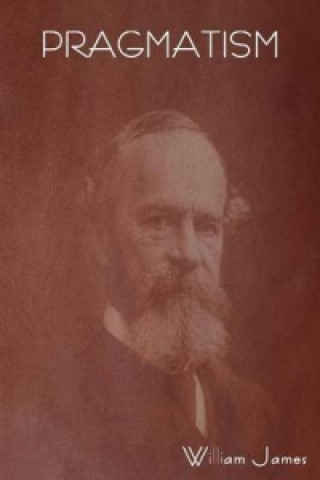
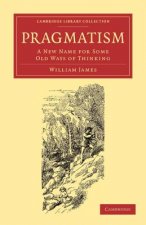
Pragmatism
 Engels
 38 b
38 b
Retourneren binnen 30 dagen
Klanten kochten ook







 /
/
 Gebonden (paperback)
 54.38
€
54.38
€






 /
Gebonden (paperback)
21.66
€
/
Gebonden (paperback)
21.66
€
 /
Gebonden (paperback)
37.77
€
/
Gebonden (paperback)
37.77
€
 /
Gebonden (harde band)
34.73
€
/
Gebonden (harde band)
34.73
€
 /
Gebonden (paperback)
39.59
€
/
Gebonden (paperback)
39.59
€



 /
Gebonden (paperback)
15.59
€
/
Gebonden (paperback)
15.59
€
 /
Gebonden (paperback)
16.20
€
/
Gebonden (paperback)
16.20
€


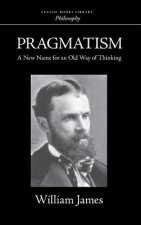
William James explains the pragmatic method and its consequences, advocating its usefulness in understanding what we take to be true belief. Pragmatism holds that to have a belief is to have certain rules for action. Any and every notion has its own set of practical consequences. The meaning of a thought is said to be whatever course of action necessarily follow from it. In metaphysical disputes between false and true notions, the dispute must be settled by considering the practical consequences of the two notions. Any two notions that can be shown to have identical practical consequences are shown to be identical notions. Writes James, "Whenever a dispute is serious, we ought to be able to show some practical difference that must follow from one side or the other's being right."
To have a clear and complete conception of an object is equivalent to considering the practical, empirical effects and properties of the object, and the conduct it will produce. James credits Charles Peirce for introducing this way of thinking about belief. James writes that it was Peirce's notion that "To attain perfect clearness in our thoughts of an object, then, we need only consider what conceivable effects of a practical kind the object may involve- what sensations we are to expect from it, and what reactions we must prepare," and that further, "to develop a thought's meaning, we need only determine what conduct it is fitted to produce: that conduct is for us its sole significance."


Informatie over het boek
Engels
Categorieën

Geef dit boek vandaag nog cadeau
Dat gaat heel eenvoudig
1 Voeg het boek toe aan je winkelwagentje en selecteer Als cadeau bezorgen 2 Je krijgt van ons per omgaand een voucher 3 Het boek wordt bezorgd op het adres van de ontvangerDit vind je misschien ook interessant

 /
Gebonden (paperback)
10.32
€
/
Gebonden (paperback)
10.32
€
 /
Gebonden (paperback)
11.23
€
/
Gebonden (paperback)
11.23
€
 /
Gebonden (paperback)
22.17
€
/
Gebonden (paperback)
22.17
€


 /
Gebonden (harde band)
28.96
€
/
Gebonden (harde band)
28.96
€


 /
Gebonden (paperback)
10.42
€
/
Gebonden (paperback)
10.42
€
 /
Gebonden (harde band)
304.45
€
/
Gebonden (harde band)
304.45
€
 /
Gebonden (paperback)
10.32
€
/
Gebonden (paperback)
10.32
€




Hoi! Ik ben Libroamiko, je boekadviseur.
Hoe kan ik je helpen?