Contact
 Hoe winkelen bij ons werkt
Bezorging
Winkelgids
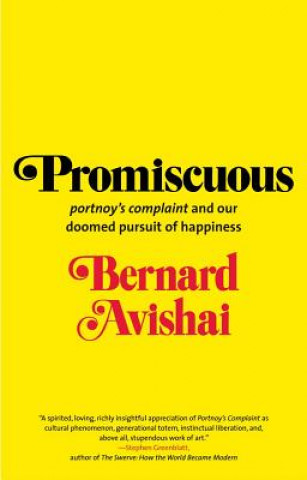
Promiscuous
 Engels
 89 b
89 b
Retourneren binnen 30 dagen
Klanten kochten ook

 /
/
 Adobe ePub DRM
 33.14
€
33.14
€




 /
/
 Gebonden (paperback)
12.42
€
Gebonden (paperback)
12.42
€

 /
Gebonden (paperback)
25.25
€
/
Gebonden (paperback)
25.25
€










 /
Gebonden (paperback)
18.38
€
/
Gebonden (paperback)
18.38
€




 /
Gebonden (paperback)
21.11
€
/
Gebonden (paperback)
21.11
€



 /
Gebonden (paperback)
35.66
€
/
Gebonden (paperback)
35.66
€

 /
Gebonden (harde band)
62.34
€
/
Gebonden (harde band)
62.34
€

 /
Gebonden (paperback)
16.16
€
/
Gebonden (paperback)
16.16
€

 /
Gebonden (paperback)
83.36
€
/
Gebonden (paperback)
83.36
€



The publication of "Portnoy's Complaint" in 1969 provoked instant, powerful reactions. It blasted Philip Roth into international fame, subjected him to unrelenting personal scrutiny and conjecture, and shocked legions of readers - some delighted, others appalled. Portnoy and other main characters became instant archetypes, and Roth himself became a touchstone for conflicting attitudes toward sexual liberation, Jewish power, political correctness, Freudian language, and bourgeois disgust. What about this book inspired Richard Lacayo of "Time" to describe it as "a literary instance of shock and awe", and the "Modern Library" to list it among the 100 best English-language novels of the twentieth century? Bernard Avishai offers a witty exploration of Roth's satiric masterpiece, based on the prolific novelist's own writings, teaching notes, and personal interviews. In addition to discussing the book's timing, rhetorical gambit, and sheer virtuousity, Avishai includes a chapter on the Jewish community's outrage over the book and how Roth survived it, and another on the author's scorching treatment of psychoanalysis. Avishai shows that Roth's irreverent novel left us questioning who, or what, was the object of the satire. Hilariously, it proved the serious ways we construct fictions about ourselves and others.


Informatie over het boek
Engels
Categorieën

Geef dit boek vandaag nog cadeau
Dat gaat heel eenvoudig
1 Voeg het boek toe aan je winkelwagentje en selecteer Als cadeau bezorgen 2 Je krijgt van ons per omgaand een voucher 3 Het boek wordt bezorgd op het adres van de ontvangerDit vind je misschien ook interessant



 /
Gebonden (harde band)
34.04
€
/
Gebonden (harde band)
34.04
€
 /
Gebonden (harde band)
65.27
€
/
Gebonden (harde band)
65.27
€

 /
Gebonden (paperback)
44.45
€
/
Gebonden (paperback)
44.45
€