
 Contact
 Hoe winkelen bij ons werkt
Bezorging
Winkelgids
 Engels
 96 b
96 b
Retourneren binnen 30 dagen
Klanten kochten ook



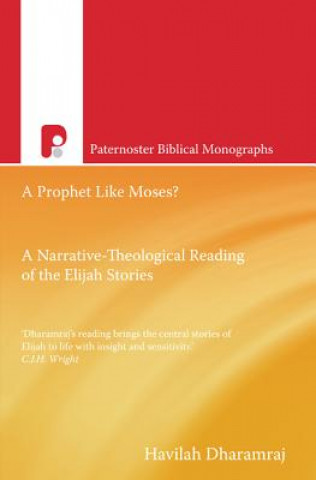
In evaluating Elijah as a prophet after the Mosaic paradigm, Dr Havilah Dharamraj proposes a radically different schema for interpreting what is one of the most dramatic and difficult texts in the Old Testament, namely, the earthquake-wind-and-fire theophany at Horeb (1 Kings 19). Since rabbinic times, the resonance between the Moses stories and the Elijah stories has been regularly noted. Taking into account that Deut. 18:18 promises Israel a 'prophet like Moses', this resonance compels an evaluation of Elijah, holding Moses as the benchmark. Here, scholarship struggles with a paradox. At Horeb Elijah fails in the critical prophetic task of intercession. Yet, his service as prophet is affirmed beyond doubt in his iconic whirlwind-and-chariots-of-fire exit. How are these to be reconciled? Is Elijah a prophet of Mosaic fibre or not? This work offers a strikingly different approach to the Elijah stories. Dharamraj employs the narrative critical method to offer a close reading of the text. Such an approach opens up intriguing possibilities in interpretation. Here, her analysis of the dramatic and difficult discourse of the earthquake-wind-fire- 'still, small voice' theophany at Horeb is notable. So also, is the case she carefully builds for whether Elijah emerges as the hoped-for 'prophet like Moses'.


Informatie over het boek
Engels
Categorieën

Geef dit boek vandaag nog cadeau
Dat gaat heel eenvoudig
1 Voeg het boek toe aan je winkelwagentje en selecteer Als cadeau bezorgen 2 Je krijgt van ons per omgaand een voucher 3 Het boek wordt bezorgd op het adres van de ontvangerDit vind je misschien ook interessant



 /
/
 Gebonden (paperback)
 31.71
€
31.71
€
 /
Gebonden (paperback)
27.76
€
/
Gebonden (paperback)
27.76
€
 /
Gebonden (paperback)
132.25
€
/
Gebonden (paperback)
132.25
€





 /
Gebonden (paperback)
29.89
€
/
Gebonden (paperback)
29.89
€
Hoi! Ik ben Libroamiko, je boekadviseur.
Hoe kan ik je helpen?