Contact
 Hoe winkelen bij ons werkt
Bezorging
Winkelgids
Puzzle
 Engels
 127 b
127 b
Retourneren binnen 30 dagen
Klanten kochten ook














 /
/
 Gebonden (paperback)
 26.09
€
26.09
€





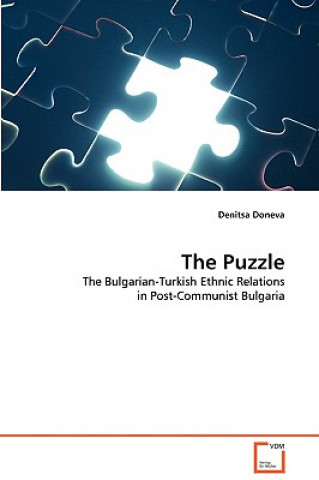
The Eastern European post-communist experience§revealed that ethnic tensions could jeopardize the§peaceful democratization of ethnically divided§societies and could lead to ethnic violence and war.§§However, in the background of the more turbulent§Balkans, and despite the hostile perceptions of§ethnic Bulgarians and Turks after 1989 inherited from§the communist repression against the Turkish minority§(revival process), Bulgaria managed to evolve as a§true success story in the challenge to cope with§ethnic tensions. Thus the Bulgarian-Turkish§interethnic co-operation in post-communist Bulgaria§presents an appealing puzzle.§§Why did the evolution of the successful ethnic model§become possible after 1989 despite the forcible§assimilation campaign which the communist elite§launched (1984-1985) against the Turkish minority,§and which polarized Bulgarian society along ethnic§lines? The book traces, reveals and evaluates the§relational web of internal and external factors that§contributed to the evolution of the successful§post-communist Bulgarian ethnic model from the§interethnic confrontation triggered by the traumatic§legacy of the revival process.


Informatie over het boek
Engels

Geef dit boek vandaag nog cadeau
Dat gaat heel eenvoudig
1 Voeg het boek toe aan je winkelwagentje en selecteer Als cadeau bezorgen 2 Je krijgt van ons per omgaand een voucher 3 Het boek wordt bezorgd op het adres van de ontvangerDit vind je misschien ook interessant

 /
Gebonden (harde band)
209.13
€
/
Gebonden (harde band)
209.13
€




 /
Gebonden (paperback)
6.36
€
/
Gebonden (paperback)
6.36
€



 /
Gebonden (paperback)
40.16
€
/
Gebonden (paperback)
40.16
€