
 Contact
 Hoe winkelen bij ons werkt
Bezorging
Winkelgids
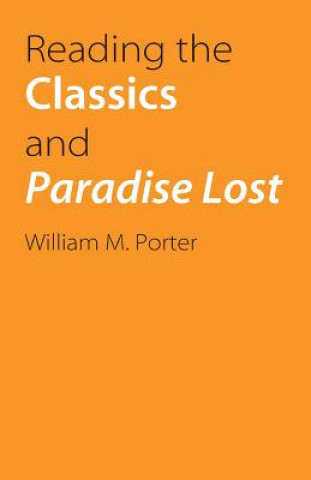
Reading the Classics and Paradise Lost
 Engels
 66 b
66 b
Tot 30 dagen retourrecht
Klanten kochten ook


 /
/
 Kalender
 25.77
€
25.77
€






Milton's early commentators-Henry Todd, Thomas Newton, Joseph Addison, and others-not only knew their classics well, they took them seriously as models of literary excellence and repositories of values. In the twentieth century, however, the classics have become mere "background." As a consequence, William M. Porter argues, not only is the foundational dimension of Milton's poetry now hardly visible, even to scholars, but the potential of Milton's poetry to revitalize the reading of the classics has been diminished. In this insightful study, Porter attempts once again to read both the classics and Milton's epic poem sensitively and intelligently. He exposes the recklessly speculative and tendentious character of much earlier work on Milton's allusions, in which allusions were promiscuously posited and in which Paradise Lost was too often regarded naively as triumphing over the classics. Porter demonstrates that Milton's allusions, in which allusions to the classics, while fewer than has been supposed, are rich with wit, irony, and thought that can be grasped only by a reader with a double perspective. William M.Porter, recipient of the CML Incentive Award for Outstanding Scholarship in 1985, is an associate professor of classical languages at the University of Houston. He has published articles in such journals as Classical and Modern Literature, Comparative Literature, and Rhetorica.


Informatie over het boek
Engels

Geef dit boek vandaag nog cadeau
Dat gaat heel eenvoudig
1 Voeg het boek toe aan je winkelwagentje en selecteer Als cadeau bezorgen 2 Je krijgt van ons per omgaand een voucher 3 Het boek wordt bezorgd op het adres van de ontvangerDit vind je misschien ook interessant



 /
/
 Gebonden (paperback)
12.63
€
Gebonden (paperback)
12.63
€

 /
Gebonden (paperback)
10.30
€
/
Gebonden (paperback)
10.30
€

 /
Gebonden (harde band)
143.14
€
/
Gebonden (harde band)
143.14
€
 /
Gebonden (paperback)
29.91
€
/
Gebonden (paperback)
29.91
€


Hoi! Ik ben Libroamiko, je boekadviseur.
Hoe kan ik je helpen?