Contact
 Hoe winkelen bij ons werkt
Bezorging
Winkelgids
 Engels
 135 b
135 b
Retourneren binnen 30 dagen
Klanten kochten ook

 /
/
 Gebonden (paperback)
 44.55
€
44.55
€


 /
Gebonden (paperback)
65.62
€
/
Gebonden (paperback)
65.62
€



 /
Gebonden (paperback)
41.31
€
/
Gebonden (paperback)
41.31
€










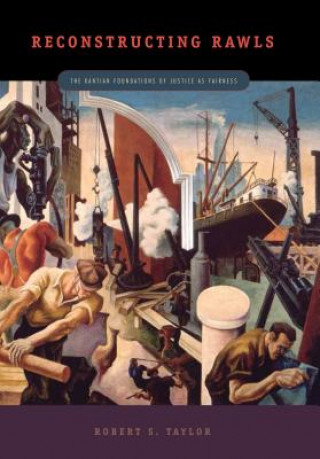
Reconstructing Rawls has one overarching goal: to reclaim Rawls for the Enlightenment-more specifically, the Prussian Enlightenment. Rawls's so-called political turn in the 1980s, motivated by a newfound interest in pluralism and the accommodation of difference, has been unhealthy for autonomy-based liberalism and has led liberalism more broadly toward cultural relativism, be it in the guise of liberal multiculturalism or critiques of cosmopolitan distributive-justice theories. Robert Taylor believes that it is time to redeem A Theory of Justice's implicit promise of a universalistic, comprehensive Kantian liberalism. Reconstructing Rawls on Kantian foundations leads to some unorthodox conclusions about justice as fairness, to be sure: for example, it yields a more civic-humanist reading of the priority of political liberty, a more Marxist reading of the priority of fair equality of opportunity, and a more ascetic or antimaterialist reading of the difference principle. It nonetheless leaves us with a theory that is still recognizably Rawlsian and reveals a previously untraveled road out of Theory-a road very different from the one Rawls himself ultimately followed.


Informatie over het boek
Engels

Geef dit boek vandaag nog cadeau
Dat gaat heel eenvoudig
1 Voeg het boek toe aan je winkelwagentje en selecteer Als cadeau bezorgen 2 Je krijgt van ons per omgaand een voucher 3 Het boek wordt bezorgd op het adres van de ontvangerDit vind je misschien ook interessant






 /
Gebonden (harde band)
71.70
€
/
Gebonden (harde band)
71.70
€