
 Contact
 Hoe winkelen bij ons werkt

Bezorging
Winkelgids
 Engels
 57 b
Tot 30 dagen retourrecht

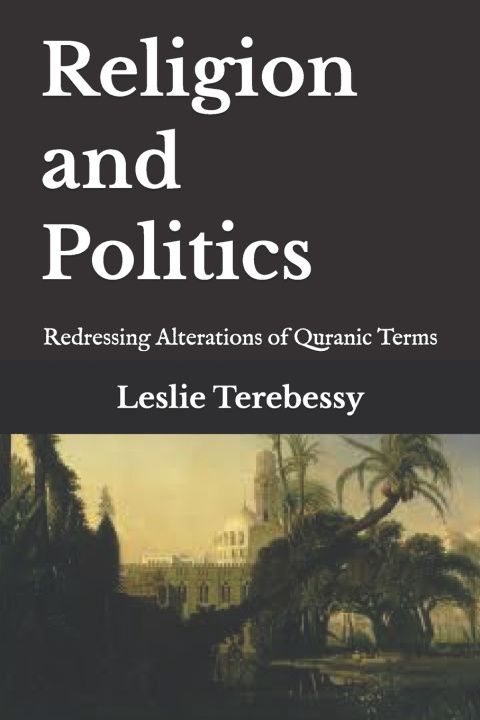
Traditionists treat the teaching of revelation as transmitted without "alteration." But an enquiry reveals a different reality. The knowledge of Islam was politicized. The corruption of knowledge was inaugurated by recourse to unwarranted practices in exegesis and jurisprudence. These encompass the repression of reason and the treatment of tradition as revelation. They also encompassed the endorsement of, and recourse to the teaching of abrogation. These practices are related. For the fusion of tradition and revelation, for example, requires the repression of reason. The repression of reason was justified by a tradition which treats using reason to understand revelation as kufr. The fusion of tradition and revelation was reflected in the teaching of "dual revelation." The politicization of revelation entailed a reorientation from revelation to tradition. Unfortunately, the reorientation from revelation to tradition entailed a "break" from revelation. The turn from revelation to tradition represented a break from the tradition of the prophet, too. For the prophet followed revelation, not tradition. The break was triggered by politics. Rulers required a reinterpretation of revelation to justify wars of aggression. For revelation prohibits aggression. The justification of wars of aggression required reinventing Islam as Islamism. It required the reinterpretation of Islam as a teaching of war. The reinterpretation was provided by jurists engaged for the purpose by hawkish rulers. The reinterpretation required the politicization of exegesis and jurisprudence. This required reinventing jihad as a war of aggression - jihad al-talab - rather than as a fight in self-defense or against persecution. The justification of jihad al-talab required the "abrogation" of all verses that restrict jihad to self-defense. The justification of jihad al-talab was buttressed by the reorientation to tradition. The turn from revelation to tradition was justified by the assertion that revelation requires "clarification" and "detailing." These would be provided by traditions. The perception that revelation require clarification and detailing by tradition, however, presumes that revelation is partly "unclear" and "insufficiently detailed." But the Book of Allah presents itself as "clear" and "fully detailed." Thus, treating revelation as partly "unclear" and "incomplete" presupposes rejecting all verses that teach the reverse, that the Book of Allah is "clear" and "fully detailed." The prohibition of using reason to understand revelation rendered the umma bereft of reason. The repression of reason corrupted the knowledge of Islam and estranged Muslims from the Book of Allah. For refraining from using reason to understand revelation made it difficult to follow revelation. In this way, the repression of reason estranged the umma from Book of Allah. Treating tradition as "revelation from God," and recourse to the teaching of abrogation produced "traditional Islam" and Islamism, respectively. Both presuppose the repression of reason. The repression of reason subordinated reason to tradition, corrupted knowledge, subordinated revelation to tradition, and encouraged the proliferation of the teachings of abrogation, predestination, and jihad al-talab. Islamism requires the "abrogation" of all verses of reconciliation. Islamism furnishes a justification of unlawful wars of aggression. Traditional Islam renders the umma resigned to its fate. Jihad al-talab was portrayed as a "sixth pillar of Islam," in the war of the dar al-Islam against the dar al-harb, in the "Islamic" version of the "clash of civilizations" thesis. These alterations entailed the politicization of exegesis and jurisprudence. Renewal requires the emancipation of revelation from the shackles of tradition, the desacralization of tradition, the rehabilitation and re-engagement of reason in the interpretation of revelation, and the affirmation of the Book of Allah as the pre-eminent pillar of Islam.


Informatie over het boek
Engels

Geef dit boek vandaag nog cadeau
Dat gaat heel eenvoudig
1 Voeg het boek toe aan je winkelwagentje en selecteer Als cadeau bezorgen 2 Je krijgt van ons per omgaand een voucher 3 Het boek wordt bezorgd op het adres van de ontvangerHoi! Ik ben Libroamiko, je boekadviseur.
Hoe kan ik je helpen?