Contact
 Hoe winkelen bij ons werkt
Bezorging
Winkelgids
 Engels
 116 b
116 b
Retourneren binnen 30 dagen
Klanten kochten ook

 /
/
 Gebonden (paperback)
 37.73
€
37.73
€











 /
Gebonden (paperback)
55.13
€
/
Gebonden (paperback)
55.13
€

 /
Gebonden (paperback)
32.06
€
/
Gebonden (paperback)
32.06
€



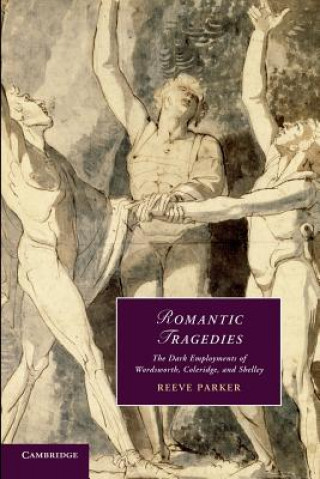
Troubled politically and personally, Wordsworth and Coleridge turned in 1797 to the London stage. Their tragedies, The Borderers and Osorio, were set in medieval Britain and early modern Spain to avoid the Lord Chamberlain's censorship. Drury Lane rejected both, but fifteen years later Coleridge's revision, Remorse, had spectacular success there, inspiring Shelley's 1819 Roman tragedy, The Cenci, aimed for Covent Garden. Reeve Parker makes a striking case for the power of these intertwined works, written against British hostility to French republican liberties and Regency repression of home-grown agitation. Covertly, Remorse and The Cenci also turn against Wordsworth. Stressing the significance of subtly repeated imagery and resonances with Virgil, Shakespeare, Racine, Jean-François Ducis and Schiller, Parker's close readings, which are boldly imaginative and decidedly untoward, argue that at the heart of these tragedies lie powerful dramatic uncertainties driven by unstable passions - what he calls, adapting Coleridge's phrase for sorcery, 'dark employments'.


Informatie over het boek
Engels
Categorieën

Geef dit boek vandaag nog cadeau
Dat gaat heel eenvoudig
1 Voeg het boek toe aan je winkelwagentje en selecteer Als cadeau bezorgen 2 Je krijgt van ons per omgaand een voucher 3 Het boek wordt bezorgd op het adres van de ontvangerDit vind je misschien ook interessant
 /
Gebonden (harde band)
185.04
€
/
Gebonden (harde band)
185.04
€




 /
Gebonden (paperback)
16.68
€
/
Gebonden (paperback)
16.68
€



 /
Gebonden (paperback)
31.25
€
/
Gebonden (paperback)
31.25
€
 /
Gebonden (paperback)
8.39
€
/
Gebonden (paperback)
8.39
€