
 Contact
 Hoe winkelen bij ons werkt

Bezorging
Winkelgids
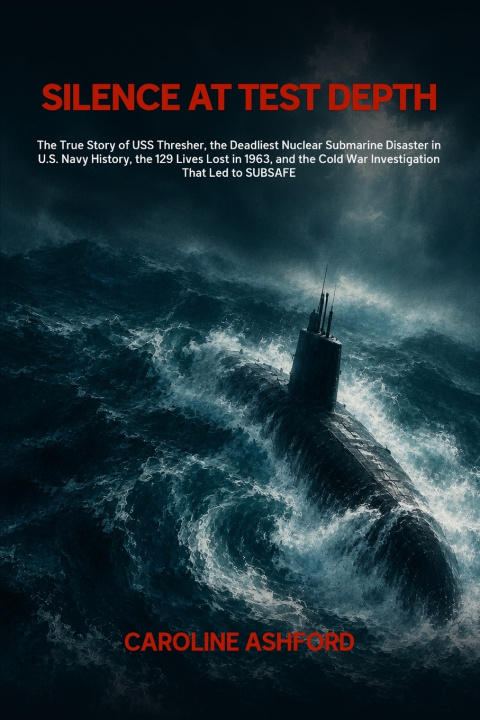
Silence at Test Depth
The True Story of USS Thresher, the Deadliest Nuclear Submarine Disaster in U.S. Navy History, the 129 Lives Lost in 1963, and the Cold War Investigation That Led to SUBSAFE
 Engels
 50 b
 Wordt verwacht
 Nieuw
Tot 30 dagen retourrecht

The true story of USS Thresher: the first nuclear submarine ever lost, and the deadliest submarine disaster in U.S. Navy history.
On the morning of April 10, 1963, Thresher began a deep dive 220 miles east of Cape Cod. At 9:13 a.m., her escort ship heard a garbled voice from below: "Experiencing minor difficulties, have positive up-angle, attempting to blow." Minutes later, the Atlantic fell silent.
All 129 men aboard were lost: officers, enlisted sailors, and the civilian engineers and technicians who had come to see her through her sea trials. The next morning the Navy announced that she was lost, and the President ordered flags flown at half-staff across the nation.
Silence at Test Depth tells what happened, why it happened, and what changed afterward. It draws on the Navy's Court of Inquiry records, declassified and released beginning in 2020 after a Freedom of Information Act lawsuit, as well as congressional testimony, official reports, acoustic analyses, contemporary newspapers, and the words of the families. This narrative history follows Thresher from the Cold War drawing board to the floor of the North Atlantic.
Inside this book, you'll discover:
- The race beneath the waves: Hyman Rickover, Nautilus, the teardrop hull of Albacore, and the design of the most advanced attack submarine of her day.
- Nine months at Portsmouth Naval Shipyard: some 3,000 silver-brazed pipe joints, most never examined by ultrasound, and the warning her first captain put in writing.
- The 129: the officers, sailors, and civilians aboard, and the men who should have sailed and did not.
- The final morning, minute by minute: the messages heard aboard USS Skylark and the sounds recorded by the Navy's secret undersea listening network.
- The search of the abyss: the bathyscaphe Trieste, the first look at the wreck more than a mile and a half down, and how the Thresher survey later helped Robert Ballard find the Titanic.
- The Court of Inquiry: the dockside test that showed how ice could choke a submarine's emergency blow, and the findings the Navy kept classified for decades.
- The birth of SUBSAFE: Rickover's testimony to Congress and the safety program under which, the Navy says, no SUBSAFE-certified submarine has ever been lost.
- Unfinished questions: the loss of USS Scorpion five years later, the acoustic evidence that challenges the official account, the long fight to open the records, and the debate over whether Thresher was ready for sea.
- On eternal patrol: the families, the memorials from Kittery, Maine, to Arlington National Cemetery, and a roll call of all 129 names.
- Echoes around the world: Russia's Kursk, Argentina's San Juan, Indonesia's Nanggala, and the Titan submersible.
Scroll up to begin the true story of USS Thresher and the 129 men on eternal patrol.


Informatie over het boek
Engels

Geef dit boek vandaag nog cadeau
Dat gaat heel eenvoudig
1 Voeg het boek toe aan je winkelwagentje en selecteer Als cadeau bezorgen 2 Je krijgt van ons per omgaand een voucher 3 Het boek wordt bezorgd op het adres van de ontvangerHoi! Ik ben Libroamiko, je boekadviseur.
Hoe kan ik je helpen?