
 Contact
 Hoe winkelen bij ons werkt
Bezorging
Winkelgids
Smoke
 Engels
 33 b
33 b
 Nieuw
Nieuw
Tot 30 dagen retourrecht

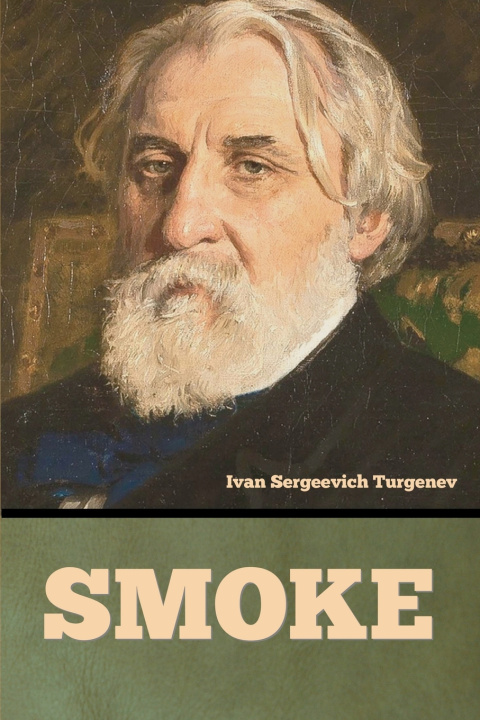
Smoke is a novel by Ivan Sergeevich Turgenev that explores the themes of love, society, and personal responsibility. The story centers on Grigory Litvinov, a young Russian man who travels to Baden-Baden before his wedding. His life takes an unexpected turn when he reunites with Irina, the woman he once deeply loved. Their meeting forces him to choose between his past emotions and the future he has planned.
Throughout the novel, Turgenev shows how love can be both powerful and confusing. Litvinov struggles with his feelings for Irina, who is now married to a wealthy nobleman and trapped by social expectations. At the same time, the novel criticizes the shallow conversations and political arguments of the Russian upper class, suggesting that many of their ideas are as temporary and meaningless as smoke. Turgenev uses these conflicts to show the importance of making thoughtful and honest decisions.
The title Smoke symbolizes the passing nature of human pride, ambition, and false hopes. By the end of the novel, Litvinov realizes that true happiness comes from living with integrity rather than chasing old dreams or social status. Turgenev leaves readers with the message that a meaningful life is built on responsibility, sincerity, and wise choices. These timeless lessons continue to make Smoke an important work of Russian literature.
About the Author
Ivan Sergeevich Turgenev (1818-1883) was a major figure in 19th-century Russian literature, known for his refined prose style and insightful portrayals of social change. Born into a wealthy landowning family in Oryol, Turgenev received a privileged education that included studies in Moscow, St. Petersburg, and Berlin. His early exposure to Western European philosophy and literature deeply influenced his worldview, helping shape his later role as a cultural bridge between Russia and Europe.
Turgenev gained prominence with works that explored the tensions within Russian society, especially between generations and ideological movements. His most famous novel, Fathers and Sons (1862), introduced the character Bazarov, often considered one of literature's first nihilists. Through such works, Turgenev examined themes like reform, tradition, love, and the changing social order, often portraying the struggles of individuals caught between old aristocratic values and emerging modern ideas. His writing is noted for its psychological depth, subtle humor, and lyrical depiction of the Russian countryside.
Although celebrated in Russia, Turgenev spent much of his later life abroad, particularly in France and Germany, where he associated with prominent European writers like Gustave Flaubert and Henry James. He played a key role in introducing Russian literature to Western audiences, influencing perceptions of Russian culture across Europe. Despite occasional criticism from Russian contemporaries who found him too Westernized, Turgenev remains a central figure in world literature, admired for his elegance, empathy, and nuanced exploration of human relationships.


Informatie over het boek
Engels
Categorieën

Geef dit boek vandaag nog cadeau
Dat gaat heel eenvoudig
1 Voeg het boek toe aan je winkelwagentje en selecteer Als cadeau bezorgen 2 Je krijgt van ons per omgaand een voucher 3 Het boek wordt bezorgd op het adres van de ontvangerHoi! Ik ben Libroamiko, je boekadviseur.
Hoe kan ik je helpen?