Contact
 Hoe winkelen bij ons werkt
Bezorging
Winkelgids
 Engels
 181 b
181 b
Tot 30 dagen retourrecht
Klanten kochten ook






 /
/
 Gebonden (paperback)
 15.53
€
15.53
€














 /
Gebonden (paperback)
8.46
€
/
Gebonden (paperback)
8.46
€

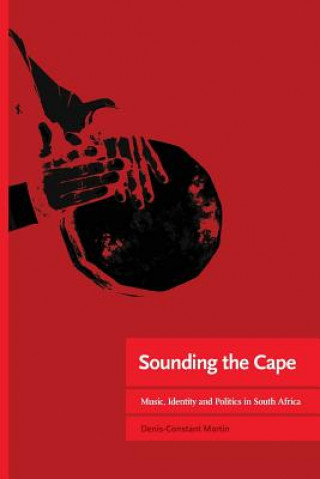
For several centuries Cape Town has accommodated a great variety of musical genres which have usually been associated with specific population groups living in and around the city. Musical styles and genres produced in Cape Town have therefore been assigned an "identity" which is first and foremost social. This volume tries to question the relationship established between musical styles and genres, and social - in this case pseudo-racial - identities. In Sounding the Cape, Denis-Constant Martin recomposes and examines through the theoretical prism of creolisation the history of music in Cape Town, deploying analytical tools borrowed from the most recent studies of identity configurations. He demonstrates that musical creation in the Mother City, and in South Africa, has always been nurtured by contacts, exchanges and innovations whatever the efforts made by racist powers to separate and divide people according to their origin. Musicians interviewed at the dawn of the 21st century confirm that mixture and blending characterise all Cape Town's musics. They also emphasise the importance of a rhythmic pattern particular to Cape Town, the ghoema beat, whose origins are obviously mixed. The study of music demonstrates that the history of Cape Town, and of South Africa as a whole, undeniably fostered creole societies. Yet, twenty years after the collapse of apartheid, these societies are still divided along lines that combine economic factors and "racial" categorisations. Martin concludes that, were music given a greater importance in educational and cultural policies, it could contribute to fighting these divisions and promote the notion of a nation that, in spite of the violence of racism and apartheid, has managed to invent a unique common culture.


Informatie over het boek
Engels

Geef dit boek vandaag nog cadeau
Dat gaat heel eenvoudig
1 Voeg het boek toe aan je winkelwagentje en selecteer Als cadeau bezorgen 2 Je krijgt van ons per omgaand een voucher 3 Het boek wordt bezorgd op het adres van de ontvangerDit vind je misschien ook interessant






 /
Gebonden (harde band)
197.63
€
/
Gebonden (harde band)
197.63
€


 /
Gebonden (paperback)
31.97
€
/
Gebonden (paperback)
31.97
€



 /
Gebonden (paperback)
14.52
€
/
Gebonden (paperback)
14.52
€