Contact
 Hoe winkelen bij ons werkt
Bezorging
Winkelgids
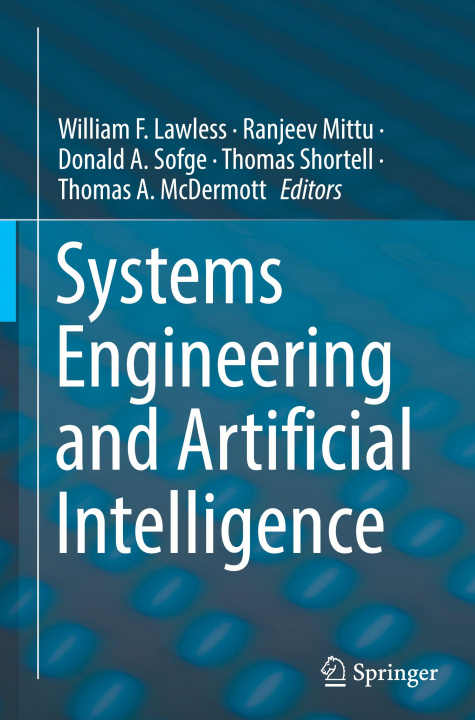
Systems Engineering and Artificial Intelligence
 Engels
 439 b
439 b
Retourneren binnen 30 dagen
Klanten kochten ook



 /
/
 Gebonden (paperback)
 25.25
€
25.25
€



This book provides a broad overview of the benefits from a Systems Engineering design philosophy in architecting complex systems composed of artificial intelligence (AI), machine learning (ML) and humans situated in chaotic environments. The major topics include emergence, verification and validation of systems using AI/ML and human systems integration to develop robust and effective human-machine teams-where the machines may have varying degrees of autonomy due to the sophistication of their embedded AI/ML. The chapters not only describe what has been learned, but also raise questions that must be answered to further advance the general Science of Autonomy. The science of how humans and machines operate as a team requires insights from, among others, disciplines such as the social sciences, national and international jurisprudence, ethics and policy, and sociology and psychology. The social sciences inform how context is constructed, how trust is affected when humans and machines depend upon each other and how human-machine teams need a shared language of explanation. National and international jurisprudence determine legal responsibilities of non-trivial human-machine failures, ethical standards shape global policy, and sociology provides a basis for understanding team norms across cultures. Insights from psychology may help us to understand the negative impact on humans if AI/ML based machines begin to outperform their human teammates and consequently diminish their value or importance. This book invites professionals and the curious alike to witness a new frontier open as the Science of Autonomy emerges.


Informatie over het boek
Engels

Geef dit boek vandaag nog cadeau
Dat gaat heel eenvoudig
1 Voeg het boek toe aan je winkelwagentje en selecteer Als cadeau bezorgen 2 Je krijgt van ons per omgaand een voucher 3 Het boek wordt bezorgd op het adres van de ontvangerDit vind je misschien ook interessant






 /
Gebonden (paperback)
6.76
€
/
Gebonden (paperback)
6.76
€
 /
Gebonden (paperback)
14.84
€
/
Gebonden (paperback)
14.84
€
 /
Gebonden (harde band)
30.71
€
/
Gebonden (harde band)
30.71
€



 /
Gebonden (harde band)
34.45
€
/
Gebonden (harde band)
34.45
€




 /
Gebonden (paperback)
26.87
€
/
Gebonden (paperback)
26.87
€