
 Contact
 Hoe winkelen bij ons werkt
Bezorging
Winkelgids
 Engels
 29 b
29 b
 Nieuw
Nieuw
Tot 30 dagen retourrecht

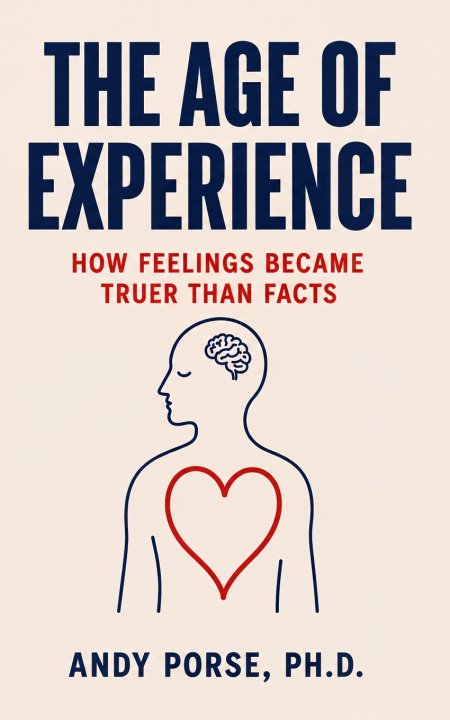
We used to ask whether something was true. Now we ask how it makes us feel.
Every civilisation places its trust somewhere. Medieval Europe trusted God. The Enlightenment trusted reason. The industrial age trusted whatever worked. We trust experience: our own, felt, first-hand, and increasingly beyond appeal.
It is worth pausing over what that shift achieved before examining what it cost. In the space of two generations, a civilisation that had required its members to endure grief, terror and humiliation in silence learned to ask them what was happening inside. It gave suffering a vocabulary. It opened doors that had been held shut for centuries against people for their colour, their sex, whom they loved. Anyone inclined to nostalgia for the world that preceded this should be asked to spend a week in it first.
But an authority that succeeds rarely knows where to stop. Feeling did not remain in the rooms where it belonged. It moved into the courtroom, the newsroom and the laboratory, places where the only question that matters is what actually happened, and there it cannot do the work required of it. Experience is the final authority on what it is like to be a person. It is not an authority on what took place. The distance between those two sentences turns out to be the distance between a witness and a judge.
The Age of Experience traces how this came about, and it does so without a villain, because there is not one. The book follows the shift through a theme park that buried its service tunnels so that no guest would see a cowboy walking through the future; through companies that stopped selling products and began selling us to ourselves; through a Victorian philanthropist of tireless conscience who could not see the child stranded on her own staircase; through a man who lost ten years of his life to a witness who was certain, sincere and wrong; and through an entrepreneur spending two million dollars a year on the project of not dying, who is only doing consistently what most of us do intermittently.
This is not a book against feelings, which would be an odd thing to be against, rather like being against weather. Emotion is not the opponent of reason but a component of it, and a person who could not feel would reason not better but catastrophically worse. The question the book pursues is narrower and considerably harder: we do not choose what we feel, so what precisely are we answerable for?
There is an answer. It is old, it is less punishing than it sounds, and it has been quietly mislaid.
Along the way the argument puts in a word for several things presently out of fashion: boredom, repetition, obligation, staying put, remaining unremarkable on purpose, and the peculiar dignity of doing what one said one would do on a day when one would rather not. What it does not offer is a programme. Readers seeking seven steps, or a transformation, or their best self, are directed elsewhere with the author's good wishes.
With fifteen original illustrations, thirteen figures, and a chapter-by-chapter guide to sources.


Informatie over het boek
Engels
