Contact
 Hoe winkelen bij ons werkt
Bezorging
Winkelgids
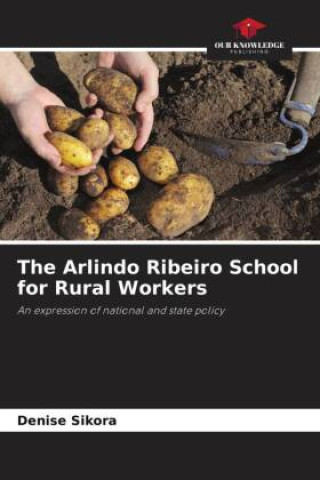
The Arlindo Ribeiro School for Rural Workers
An expression of national and state policy. DE
 Engels
 172 b
172 b
Tot 30 dagen retourrecht
Klanten kochten ook





In this book, we demonstrate how rural education became established in the municipality of Guarapuava, Paraná, in the mid-20th century in the context of Brazilian developmentalism. During this period, the municipality was fighting for economic and political space on the state scene in response to national policy. Thus, education became an element that would contribute to this development, so much so that in its history, the struggle for more schools and the creation of a school specifically for rural workers is a record that it was possible to be part of the national context, even if through the lens of agriculture, which was very strong in the region. The research includes a bibliographic study and document analysis, such as documents referring to the Arlindo Ribeiro School and newspapers that circulated in Guarapuava during the period analysed. We found that the rural education offered at the Arlindo Ribeiro Rural Workers' School in Guarapuava reflected what was being proposed on the national scene, with an education that included elements of the new school.


Informatie over het boek
Engels
Categorieën

Geef dit boek vandaag nog cadeau
Dat gaat heel eenvoudig
1 Voeg het boek toe aan je winkelwagentje en selecteer Als cadeau bezorgen 2 Je krijgt van ons per omgaand een voucher 3 Het boek wordt bezorgd op het adres van de ontvangerDit vind je misschien ook interessant



 /
/
 Gebonden (paperback)
 7.69
€
7.69
€
 /
Gebonden (paperback)
14.89
€
/
Gebonden (paperback)
14.89
€




 /
Gebonden (harde band)
57.25
€
/
Gebonden (harde band)
57.25
€