
 Contact
 Hoe winkelen bij ons werkt
Bezorging
Winkelgids
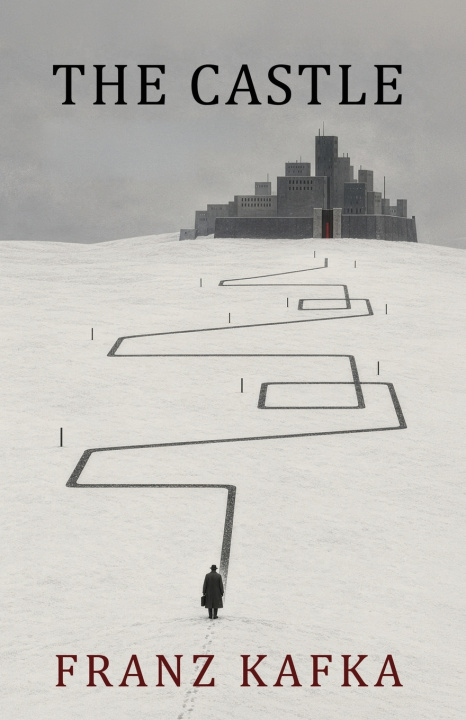
The Castle
An Unfinished Novel of Bureaucracy, Alienation, Authority, and the Search for Belonging
 Engels
 41 b
41 b
 Nieuw
Nieuw
Tot 30 dagen retourrecht

K. arrives in a snowbound village claiming that he has been engaged by the Castle as a land surveyor. Almost immediately, the status of his appointment becomes uncertain. Officials contradict one another, messages clarify nothing, and every attempt to reach the authorities responsible for his position leads instead to another intermediary, another procedure, and another delay.
Above the village stands the Castle, apparently governing everything yet remaining strangely inaccessible. K.'s efforts to establish his employment and secure a legitimate place in the community become an increasingly bewildering struggle with a system whose power is everywhere but whose source can never quite be reached. Bureaucracy becomes comic, oppressive, and existential at once.
Determined to gain recognition, K. pursues officials, messengers, assistants, innkeepers, and villagers who may be able to bring him closer to the Castle. Yet every connection draws him further into a network of obscure relationships and unwritten rules. Even Klamm, the elusive official K. most desperately wishes to approach, seems simultaneously near at hand and impossibly remote.
K.'s struggle is not only administrative. The village is a community with its own hierarchies, loyalties, suspicions, and forms of belonging, and his insistence on challenging its arrangements marks him continually as an outsider. His relationship with Frieda becomes entangled with his pursuit of the Castle, blurring the boundaries between intimacy, ambition, social status, and the desire to be accepted.
Kafka wrote The Castle in 1922 but never completed it. After his death in 1924, his friend and literary executor Max Brod prepared the unfinished manuscript for publication, and the novel first appeared in 1926. Because Kafka abandoned the work before writing a final conclusion, K.'s search for recognition remains unresolved-a fact that has become inseparable from the novel's extraordinary atmosphere of frustrated expectation.
Darkly comic and increasingly dreamlike, The Castle transforms paperwork, telephone calls, contradictory instructions, inaccessible officials, and endless waiting into a larger examination of authority and human belonging. K. can see the institution that seems capable of validating his existence, but he cannot obtain a clear answer from it. The closer he tries to move toward certainty, the more complicated the world becomes.
The result is one of Kafka's most haunting visions: a world in which authority is undeniable but almost impossible to locate, rules govern lives without becoming fully comprehensible, and a man seeking recognition finds himself trapped between resistance and the desire to belong.


Informatie over het boek
Engels
Categorieën

Geef dit boek vandaag nog cadeau
Dat gaat heel eenvoudig
1 Voeg het boek toe aan je winkelwagentje en selecteer Als cadeau bezorgen 2 Je krijgt van ons per omgaand een voucher 3 Het boek wordt bezorgd op het adres van de ontvangerHoi! Ik ben Libroamiko, je boekadviseur.
Hoe kan ik je helpen?