Contact
 Hoe winkelen bij ons werkt
Bezorging
Winkelgids
Catastrophe Remembered by the Non-Traumatic
 Engels
 152 b
152 b
Tot 30 dagen retourrecht
Klanten kochten ook
















 /
/
 Gebonden (paperback)
 30.76
€
30.76
€

 /
Gebonden (paperback)
40.21
€
/
Gebonden (paperback)
40.21
€


 /
Gebonden (harde band)
42.64
€
/
Gebonden (harde band)
42.64
€

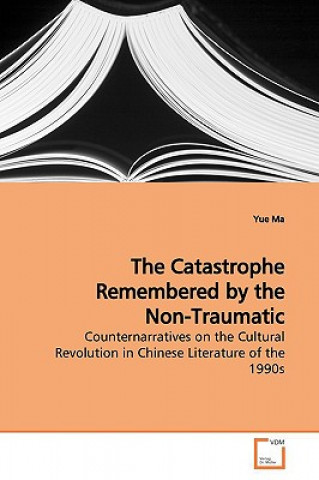
After its demise in 1976, the Cultural Revolution §has been conventionally portrayed as an era of §political persecution, a cultural desert, an §ascetic regime, and a decade of total chaos. §Contested memories of this period, however, appeared §in literary writings of the 1990s: memories that §placed in the foreground self-motivated learning, §sexual indulgence, juvenile adventure and mundane §living. Remembering the Cultural Revolution from the §perspectives of the non-traumatic, these narratives §allowed certain social groups and individuals to §forge new identities beyond that of the political §victim. While sharing a common gesture of redeeming §personal histories from a collective past, these §narratives were used in various ways to serve the §needs of the present. In different cases, the §construction of an alternative reality of the §Cultural Revolution could serve as a coping strategy §that fulfils personal or psychological needs, as a §means to legitimize new intellectual trends, as a §way to boost an emerging cultural fashion, or as a §weapon with which cultural agents contend for §positions in a drastically restructured cultural §field.


Informatie over het boek
Engels
Categorieën

Geef dit boek vandaag nog cadeau
Dat gaat heel eenvoudig
1 Voeg het boek toe aan je winkelwagentje en selecteer Als cadeau bezorgen 2 Je krijgt van ons per omgaand een voucher 3 Het boek wordt bezorgd op het adres van de ontvangerDit vind je misschien ook interessant

 /
Gebonden (paperback)
12.18
€
/
Gebonden (paperback)
12.18
€


 /
Gebonden (paperback)
15.73
€
/
Gebonden (paperback)
15.73
€






 /
Gebonden (paperback)
48.84
€
/
Gebonden (paperback)
48.84
€

 /
Gebonden (paperback)
97.38
€
/
Gebonden (paperback)
97.38
€