
 Contact
 Hoe winkelen bij ons werkt

Bezorging
Winkelgids
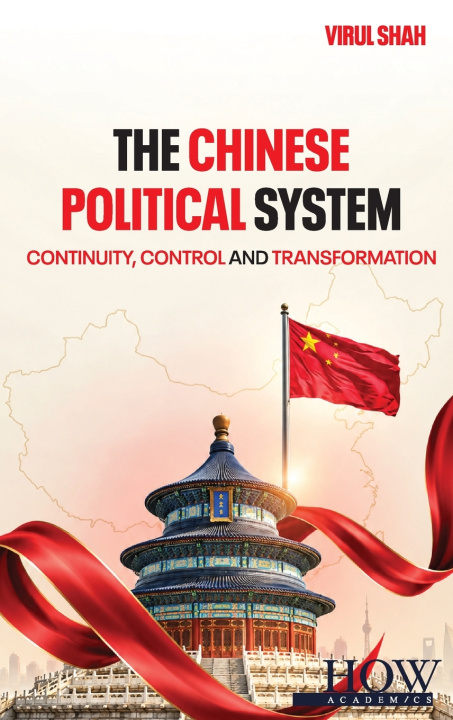
The Chinese Political System- Continuity, Control and Transformation
 Engels
 159 b
 Wordt verwacht
 Nieuw
Tot 30 dagen retourrecht

The contemporary Chinese political landscape stands as one of the most
consequential, complex, and closely scrutinized subjects of the twenty-first
century. As China asserts its role as a global superpower, the internal mechanisms
governing its economic choices, domestic policies, and foreign relations ripple
far beyond its borders. This volume offers a rigorous and comprehensive
examination of the strategic pivots, internal tensions, and structural shifts that
define modern Chinese governance.
Rather than viewing Chinese politics through a single analytical lens, this
book brings together multifaceted research exploring the core dynamics driving
Beijing's decision-making today. The chapters are organized to provide both
historical context and forward-looking analysis across three critical dimensions:
domestic systemic evolution, global economic and strategic initiatives, and the
changing friction points of major-power geopolitics.
The volume opens with a critical look at the domestic foundations of China's
current trajectory, assessing the sustainability of its economic policies following
major plenary shifts and analyzing the long-term systemic transition from the
era of Hu Jintao to the centralized authority of Xi Jinping's strongman rule. It
then evaluates the domestic engines behind China's changing nuclear policy
and examines how institutional control operates internally, specifically through
an analysis of foreign news coverage in People's Daily over nearly three decades.
Moving outward, the text investigates China's expanding international
footprint. Authors analyze the strategic opportunities and structural hurdles
inherent in the Belt and Road Initiative, alongside China's broader rising
influence in international institutional politics. Finally, the book addresses the
deeply intertwined nature of domestic politics and foreign policy, particularly
focusing on the hardening of U.S.-China relations and how mutual domestic
perceptions shape this defining bilateral friction. Written for scholars, policymakers, students, and analytical observers
of global affairs, this book aims to deconstruct the "black box" of Chinese
political decision-making. By analyzing both the domestic imperatives that
motivate Beijing and the international reactions those motivations provoke,
this collection provides readers with the essential analytical tools needed to
navigate the future of global politics.


Informatie over het boek
Engels

Geef dit boek vandaag nog cadeau
Dat gaat heel eenvoudig
1 Voeg het boek toe aan je winkelwagentje en selecteer Als cadeau bezorgen 2 Je krijgt van ons per omgaand een voucher 3 Het boek wordt bezorgd op het adres van de ontvangerHoi! Ik ben Libroamiko, je boekadviseur.
Hoe kan ik je helpen?