
 Contact
 Hoe winkelen bij ons werkt
Bezorging
Winkelgids
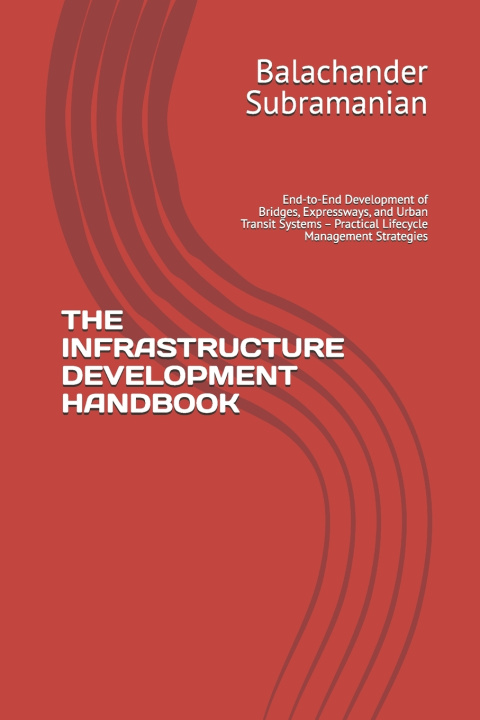
THE INFRASTRUCTURE DEVELOPMENT HANDBOOK
End-to-End Development of Bridges, Expressways, and Urban Transit Systems - Practical Lifecycle Management Strategies
 Engels
 90 b
90 b
 Nieuw
Nieuw
Tot 30 dagen retourrecht

The Infrastructure Development Handbook is a definitive, practitioner-driven reference that delivers a complete, end-to-end understanding of infrastructure project development across the full lifecycle-from concept and feasibility to design, procurement, construction, commissioning, and long-term asset management.
Designed for large-scale and complex infrastructure systems, the book integrates engineering, project management, systems thinking, and digital transformation into a unified framework for delivering high-value infrastructure assets. It provides deep insights into the planning and execution of bridges, expressways, rail systems, metro networks, and urban infrastructure, while addressing the growing need for sustainability, resilience, and smart infrastructure solutions.
This handbook distinguishes itself through its lifecycle-centric approach, combining:
- Strategic infrastructure planning and policy alignment
- Advanced engineering design integration
- Contracting and procurement frameworks (EPC, PPP, Hybrid models)
- Construction execution methodologies for mega projects
- Digital engineering (BIM, Digital Twins, AI-driven planning)
- Asset management, operations, and lifecycle optimization
It bridges the gap between theory and execution, enabling practitioners to deliver infrastructure that is efficient, sustainable, resilient, and future-ready.
Infrastructure is the backbone of economic growth, social development, and national competitiveness. From expressways connecting regions to metro systems transforming urban mobility, modern infrastructure projects are no longer isolated engineering efforts-they are complex, integrated systems requiring multidisciplinary coordination across decades of lifecycle performance.
However, despite advancements in engineering and project management, infrastructure delivery continues to face persistent challenges:
- Cost overruns and schedule delays
- Fragmented lifecycle planning
- Poor integration between design, construction, and operations
- Limited adoption of digital technologies
- Weak asset lifecycle optimization
Infrastructure success is not determined at construction-but across the entire lifecycle.
The Infrastructure Development Handbook introduces a Lifecycle Integration Framework, where planning, engineering, execution, and operations are treated as a continuous, interconnected system rather than siloed phases.
It combines:
- Systems engineering principles
- Mega project delivery strategies
- Digital transformation tools
- Asset lifecycle optimization techniques
- Smart cities
- Sustainable infrastructure
- Climate-resilient systems
- Data-driven asset management


Informatie over het boek
Engels
