
 Contact
 Hoe winkelen bij ons werkt
Bezorging
Winkelgids
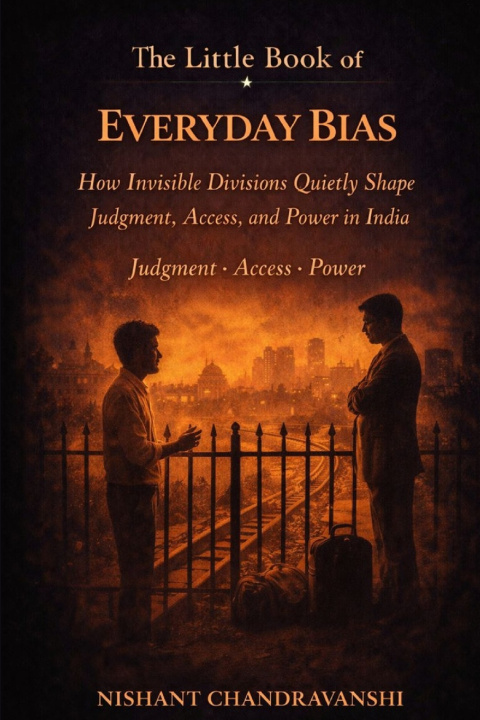
The Little Book of Everyday Bias
How Invisible Divisions Quietly Shape Judgment, Access, and Power in India | Judgment | Access | Power
 Engels
 25 b
25 b
Tot 30 dagen retourrecht

Most books treat bias as something loud.
Obvious.
Intentional.
This one doesn't.
The Little Book of Everyday Bias examines how judgment quietly breaks down in ordinary decisions-long before hostility, debate, or moral failure appear.
Bias, as shown here, rarely feels wrong.
It feels efficient.
Practical.
Reasonable.
It hides inside shortcuts:
Familiar backgrounds
Comfortable signals
"Merit," "fit," "trust," and "risk"
Decisions made quickly because they feel safe
This book is not about bad people.
It's about how systems reward speed over accuracy-and how that tradeoff distorts judgment.
Across hiring, education, housing, healthcare, finance, leadership, and daily interactions, people are often sorted before they are evaluated.
Not denied outright.
Delayed.
Observed longer.
Trusted later.
Each moment feels minor.
Together, they decide outcomes.
The book follows a clear progression:
How people are sorted before interaction
How bias disguises itself as merit
How trust and care quietly replace evaluation
How access narrows without confrontation
What this costs-personally and systemically
There are no villains here.
No slogans.
No calls to action.
Only mechanisms.
You'll see how:
Comfort is mistaken for intelligence
Familiarity replaces evidence
Confidence is rewarded before competence
Explanations protect shortcuts after decisions are made
This is not a self-help book.
It won't motivate you.
It won't tell you what to do.
It does something rarer.
It slows judgment.
The final chapter introduces a single restraint-a private pause that interrupts bias without accusation, ideology, or performance. Not to make you "better," but to make you more precise.
If you've ever:
Wondered why capable people disappear quietly
Felt decisions were "reasonable" but wrong
Trusted explanations that sounded smart but aged badly
Noticed that nothing felt unfair-yet outcomes stayed uneven
This book will feel uncomfortably familiar.
It doesn't argue.
It exposes.
And once seen, these patterns are hard to unsee.
The Little Book of Everyday Bias is for readers who value judgment over certainty, clarity over comfort, and restraint over outrage.
Because the most dangerous decisions are rarely reckless.
They're the ones that feel sensible at the time.
Regards,
Nishant Chandravanshi


Informatie over het boek
Engels

Geef dit boek vandaag nog cadeau
Dat gaat heel eenvoudig
1 Voeg het boek toe aan je winkelwagentje en selecteer Als cadeau bezorgen 2 Je krijgt van ons per omgaand een voucher 3 Het boek wordt bezorgd op het adres van de ontvangerHoi! Ik ben Libroamiko, je boekadviseur.
Hoe kan ik je helpen?