
 Contact
 Hoe winkelen bij ons werkt
Bezorging
Winkelgids
 Engels
 53 b
53 b
 Wordt verwacht
 Nieuw
Nieuw
Tot 30 dagen retourrecht

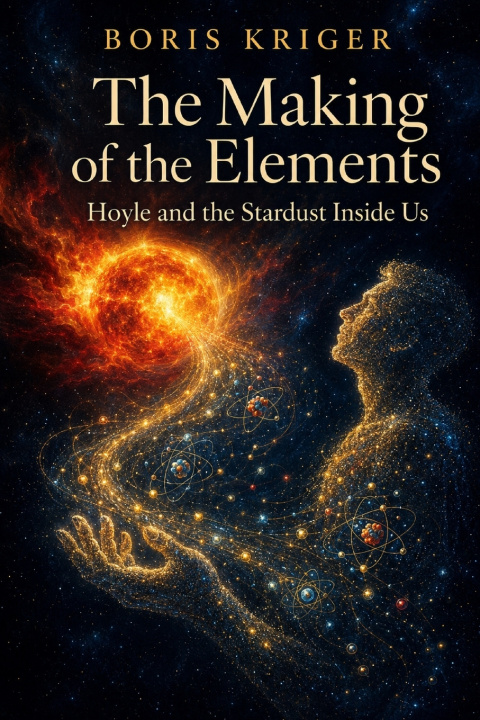
Fred Hoyle worked out where you came from. Not in the vague way that phrase is usually meant, but atom by atom: the calcium in your teeth, the iron riding in your blood, the oxygen you are using right now to read this sentence. All of it was assembled inside stars that died before the Sun was born, and a Yorkshire boy who skipped most of school is the reason we know it.
He got there by a method that ought to have embarrassed him. Carbon exists in quantity, he reasoned, and carbon is very difficult to make, so the carbon nucleus must have a particular energy level in a particular place, or none of us would be here to argue about it. The physicists said no such level had ever been seen. He asked them to look again. It was there, within a whisker of where he said it would be.
Then he used the same method for the next fifty years, and it took him to the steady-state universe, to a field that manufactures matter in empty space, to influenza arriving on comets, to a public accusation that the British Museum was displaying a forged fossil. He named the Big Bang as an insult and watched the name outlive him. He said out loud that Jocelyn Bell should have had the Nobel Prize; nine years later the committee gave his own share to somebody else.
This book follows one method through one life, and refuses the two easy stories about him - the martyr and the crank. It also does something no previous account of Hoyle has attempted. In the closing chapters I take up the question he left open and answer it from my own work: the carbon level is not a coincidence and it was not adjusted by anybody. It follows from shape. Three alpha configurations can only arrange themselves in so many ways, and one of those ways sits exactly where Hoyle said the universe needed it to sit. The most famous fine-tuning argument in physics was founded on that level. It does not survive it.
A book about stubbornness, stardust, nuclear structure, English academic politics, ice axes, science fiction, and the particular loneliness of being right too early and then wrong too long.
Keywords: Fred Hoyle, nucleosynthesis, carbon, steady-state cosmology, anthropic principle, history of astrophysics, nuclear structure


Informatie over het boek
Engels

Geef dit boek vandaag nog cadeau
Dat gaat heel eenvoudig
1 Voeg het boek toe aan je winkelwagentje en selecteer Als cadeau bezorgen 2 Je krijgt van ons per omgaand een voucher 3 Het boek wordt bezorgd op het adres van de ontvangerHoi! Ik ben Libroamiko, je boekadviseur.
Hoe kan ik je helpen?