
 Contact
 Hoe winkelen bij ons werkt
Bezorging
Winkelgids
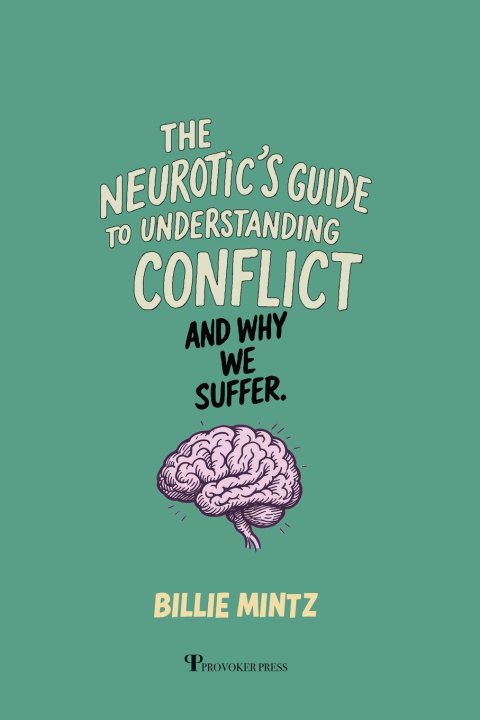
The Neurotic's Guide To Understanding Conflict And Why We Suffer
 Engels
 36 b
36 b
Tot 30 dagen retourrecht

The Neurotic's Guide to Understanding Conflict and Why We Suffer by Billie Mintz opens by telling you something most people avoid saying directly: you are creating your own problems.
The recurring arguments, the relationships that keep going sideways, the resentment you carry, the lying awake replaying what you should have said, the same painful patterns that keep showing up with different people, you are not just the victim of those situations. You are involved in creating them.
Billie Mintz is not a therapist, a guru, or a self-help expert. He is an investigative documentary filmmaker and life coach who spent more than a decade in intensive psychoanalysis with Dr. Bernard Glazman. He came out of that experience changed enough to write down what he learned for people who do not have the time, money, or opportunity to spend years in therapy themselves.
It begins with a simple definition: a neurotic is someone whose patterns create suffering for themselves and others. By that definition, most of us are neurotic. Some know it. Some deny it. Some are just better at hiding it, even from themselves.
What sets this book apart is the lens Mintz brings from his other life. As an investigative documentary filmmaker, he has spent years looking beyond official stories, uncovering what was left out, following hidden motives, and exposing the mechanics behind crimes and conspiracies. In this book, he brings that same forensic instinct to the psychology of conflict.
Every argument becomes a crime scene. Every resentment becomes evidence. Every recurring pattern becomes a case file. Every story you have told yourself about why someone else was wrong gets reopened for investigation.
Most of us walk around with an official story about our conflicts. In that story, we are the reasonable ones, the misunderstood ones, the people who wanted peace but got dragged into chaos. But beneath that story lies another truth: how we provoke, misinterpret, react, blame, withdraw, attack, resent, and then use the damage as proof that we were right all along.
The book is built around one of Mintz's most important teachings: Don't provoke and don't be provoked. We often believe we are only reacting to other people, but many times we have already stepped into the setup. We push, assume, exaggerate, or take the bait. When the situation explodes, we point to the explosion as evidence that someone else caused the whole thing.
Mintz shows how ordinary life becomes material for suffering. A delayed text becomes a rejection. A criticism becomes humiliation. A disagreement becomes an attack. A tone, a look, an email, or a small disappointment becomes evidence. Before long, the unconscious hands us the same old conclusion: I was wronged again.
What makes the book stick is the voice. Mintz is self-deprecating, blunt, candid, and funny about human dysfunction. He is not diagnosing people from a distance. He is using himself as the evidence.
The centerpiece of the book is a practical framework for understanding how conflict unfolds inside you. It breaks down the thoughts, voices, assumptions, and emotional hijacks that fire in the seconds before you blow up, shut down, send the message, or say the thing you regret.
This is not a book about becoming calm, healed, enlightened, or free from conflict. Mintz is upfront that the book will not fix you or cure you. But it can help you understand yourself and the people in your life in a way that is both unsettling and oddly relieving.
The goal is to interrupt the automatic response system that creates suffering and conflict: catch yourself before you send the nuclear email, save the message as a draft, pause before reacting, and recognize when your mind is building a case rather than seeing reality.
This book gives a real answer. It is not the one you have been telling yourself.


Informatie over het boek
Engels

Geef dit boek vandaag nog cadeau
Dat gaat heel eenvoudig
1 Voeg het boek toe aan je winkelwagentje en selecteer Als cadeau bezorgen 2 Je krijgt van ons per omgaand een voucher 3 Het boek wordt bezorgd op het adres van de ontvangerHoi! Ik ben Libroamiko, je boekadviseur.
Hoe kan ik je helpen?