
 Contact
 Hoe winkelen bij ons werkt
Bezorging
Winkelgids
 Engels
 28 b
28 b
 Nieuw
Nieuw
Retourneren binnen 30 dagen

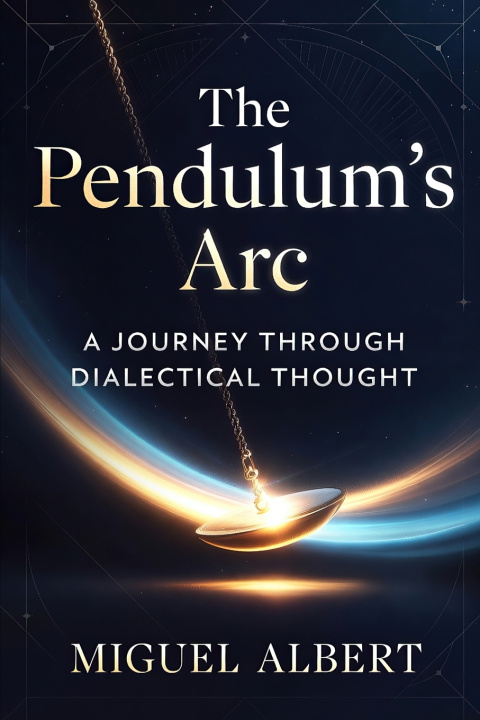
We are creatures of contradiction. In the quiet theatre of our own minds, a silent, ceaseless argument unfolds-a proposition met by its opposite, a friction from which new understanding emerges. This everyday process is not a flaw in our thinking; it is the very engine of consciousness. The world we have built, from our legal codes to our scientific paradigms, from political revolutions to our most private epiphanies, is a monument to this dynamic, turbulent, and generative process. This book is an exploration of that process, a journey through the grand and intricate landscape of dialectical thought, where the simple acknowledgment that everything is pregnant with its own negation becomes the master key to understanding change itself.
Beginning with the towering figure of G. W. F. Hegel, whose master-slave dialectic and phenomenology of Spirit revealed the architecture of reality as a drama of self-knowing reason, this book traces the dialectical tradition through its most consequential transformations. Journey into the materialist inversion of Karl Marx, who set Hegel's dialectic back on its feet and found its engine not in the self-movement of the Idea but in the bloody, grimy collisions of class struggle and the contradictions of capital itself. Explore Murray Bookchin's Dialectical Naturalism, a profound ecological turn that reads nature itself as a developmental process of increasing complexity, diversity, and subjectivity, and that demands we heal the catastrophic rift between humanity and its natural matrix.
Venture into the paradoxical territory of theological dialectics, where Søren Kierkegaard's absolute paradox and Karl Barth's Wholly Other confront reason with contradictions it cannot resolve. Descend into the deep grammar of dialectical method-contradiction, negation, and the untranslatable sublation-to understand the machinery by which the old perishes and the new is born. Face the formidable challenges of formal logic, liberal political philosophy, and the post-structuralist celebration of difference, and encounter Theodor Adorno's Negative Dialectics, a dialectic that has renounced the dream of final synthesis but refused to surrender the labor of the negative. Walk with Frantz Fanon onto the colonial terrain, where the dialectic of recognition breaks down into the zone of nonbeing and must be replaced by a dialectic of revolutionary violence that births a new humanity.
In our age of polycrisis-climate collapse, rising authoritarianism, grotesque inequality, algorithmic alienation-this book argues that the dialectical tradition is not a relic but a required intellectual discipline. It is a way of seeing that refuses the comfortable stasis of fixed categories, demanding instead that we look at reality as a stream of constant becoming. The Pendulum's Arc is both an accessible introduction for newcomers and a rich, rigorous exploration for those already acquainted with the tradition, inviting readers to discover a way of thinking that is as urgent and indispensable as the crises it helps us understand.


Informatie over het boek
Engels

Geef dit boek vandaag nog cadeau
Dat gaat heel eenvoudig
1 Voeg het boek toe aan je winkelwagentje en selecteer Als cadeau bezorgen 2 Je krijgt van ons per omgaand een voucher 3 Het boek wordt bezorgd op het adres van de ontvangerHoi! Ik ben Libroamiko, je boekadviseur.
Hoe kan ik je helpen?