
 Contact
 Hoe winkelen bij ons werkt
Bezorging
Winkelgids
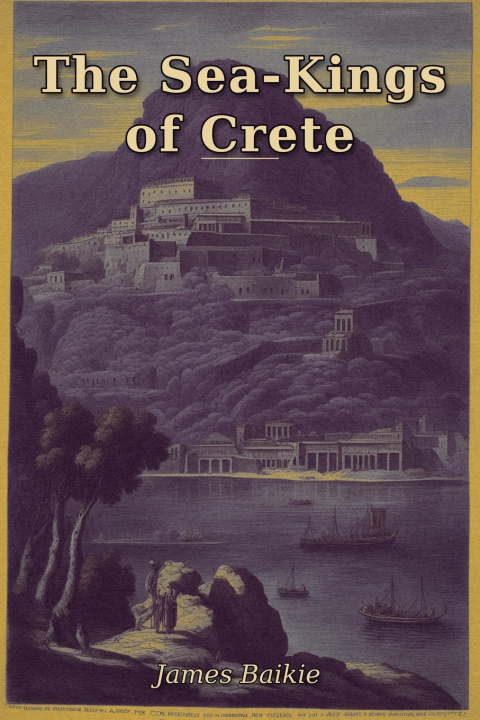
The Sea-Kings of Crete
 Engels
 69 b
69 b
 Nieuw
Nieuw
Tot 30 dagen retourrecht

he resurrection of the prehistoric age of Greece, and the disclosure of
the astonishing standard of civilization which had been attained on the
mainland and in the isles of the AEgean at a period at least 2,000 years ear-
lier than that at which Greek history, as hitherto understood, begins, may be
reckoned as among the most interesting results of modern research into the
relics of the life of past ages. The present generation has witnessed remark-
able discoveries in Mesopotamia and in Egypt, but neither Niffur nor Aby-
dos disclosed a world so entirely new and unexpected as that which has been
revealed by the work of Schliemann and his successors at Troy, Mycenae, and
Tiryns, and by that of Evans and the other explorers-Italian, British, and
American-in Crete. The Mesopotamian and Egyptian discoveries traced
back a little farther streams which had already been followed far up their
course; those of Schliemann and Evans revealed the reality of one which, so
to speak, had hitherto been believed to flow only through the dreamland of
legend. It was obvious that mighty men must have existed before Agamem-
non, but what manner of men they were, and in what manner of world they
3 JAMES BAIKIE
lived, were matters absolutely unknown, and, to all appearance, likely to re-
main so. An abundant wealth of legend told of great Kings and heroes, of
stately palaces, and mighty armies, and powerful fleets, and the whole ma-
terial of an advanced civilization. But the legends were manifestly largely
imaginative-deities and demi-gods, men and fabulous monsters, were min-
gled in them on the same plane-and it seemed impossible that we should
ever get back to the solid ground, if solid ground had ever existed, on which
these ancient stories first rested.
For the historian of the middle of the nineteenth century Greek history be-
gan with the First Olympiad in 776 B.C. Before that the story of the return
of the Herakleids and the Dorian conquest of the men of the Bronze Age
might very probably embody, in a fanciful form, a genuine historical fact;
the Homeric poems were to be treated with respect, not only on account of
their supreme poetical merit, but as possibly representing a credible tradi-
tion, though, of course, their pictures of advanced civilization were more or
less imaginative projections upon the past of the culture of the writer's own
period or periods. Beyond that lay the great waste land of legend, in which
gods and godlike heroes moved and enacted their romances among 'Gor-
gons and Hydras and Chimeras dire.' What proportion of fact, if any, lay in
the stories of Minos, the great lawgiver, and his war fleet, and his Labyrinth,
with its monstrous occupant; of Theseus and Ariadne and the Minotaur;
of Daedalus, the first aeronaut, and his wonderful works of art and science;
or of any other of the thousand and one beautiful or tragic romances of an-
cient Hellas, to attempt to determine this lay utterly beyond the sphere of
the serious historian. 'To analyze the fables,' says Grote, 'and to elicit from
them any trustworthy particular facts, appears to me a fruitless attempt. The
religious recollections, the romantic inventions, and the items of matter of


Informatie over het boek
Engels

Geef dit boek vandaag nog cadeau
Dat gaat heel eenvoudig
1 Voeg het boek toe aan je winkelwagentje en selecteer Als cadeau bezorgen 2 Je krijgt van ons per omgaand een voucher 3 Het boek wordt bezorgd op het adres van de ontvangerHoi! Ik ben Libroamiko, je boekadviseur.
Hoe kan ik je helpen?