
 Contact
 Hoe winkelen bij ons werkt
Bezorging
Winkelgids
The Standard
 Engels
 36 b
36 b
 Nieuw
Nieuw
Tot 30 dagen retourrecht

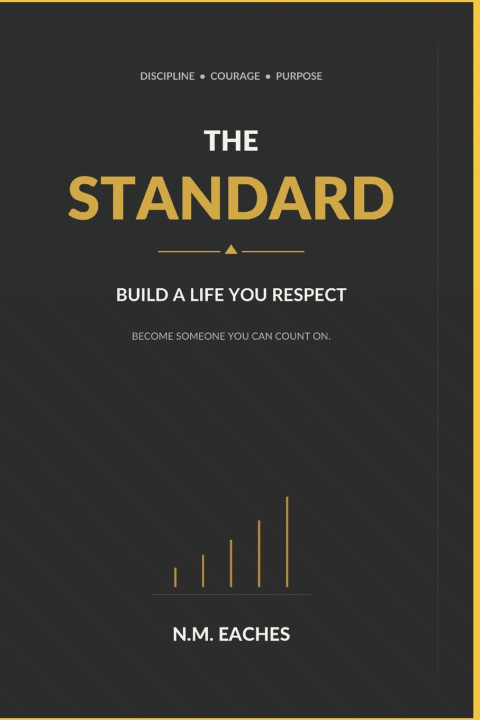
The book argues that most people already know, at least roughly, what kind of life they want. The real problem is the integrity gap-the distance between what they say matters and what their ordinary behavior proves matters.
Instead of chasing motivation, confidence, or constant positivity, The Standard focuses on building evidence through action. You keep small promises, tell yourself the truth, handle problems before they become emergencies, strengthen your body, control your attention, improve your finances, develop valuable skills, build real relationships, and recover quickly when you fail.
The book is organized around eight major areas: facing reality without self-hatred; building discipline and environments that support good behavior; becoming capable through courage, competence, money management, and finishing what you start; building friendships, healthy love, boundaries, and community; creating purpose, adventure, service, and legacy; handling failure, shame, comparison, fear, and approval; surviving grief and difficult seasons without abandoning yourself; and ultimately writing a personal standard for how you intend to live.
One of the major themes is that motivation is unreliable. Systems, rules, and minimum standards matter more. On bad days, you do the reduced version instead of disappearing completely. Ten minutes of exercise, one page, one application, one phone call-small actions preserve identity and keep failure from becoming a collapse.
Another major idea is capability creates freedom. Physical strength gives you options. Financial stability gives you options. Communication skills give you options. Courage gives you options. Useful skills make the world less intimidating because you increasingly trust yourself to figure things out.
Relationships are treated as essential rather than optional. The book pushes readers to stop waiting to be chosen, initiate friendships, judge romantic relationships by patterns rather than promises, set boundaries before resentment builds, and actively create community. Love should deepen your life, not require abandoning yourself to keep another person.
The book also rejects the idea that life should become one endless optimization project. Discipline exists so you can live more, not merely become better at routines. Adventure, music, travel, hobbies, friendships, laughter, and doing things badly just because you enjoy them all have a legitimate place in a meaningful life.
Failure is inevitable, but the book argues that failure should remain an event, not become an identity. Instead of "I am a failure," the reader learns to ask what happened, what was controllable, what was learned, and what comes next. The master skill becomes returning quickly after setbacks.
The practical centerpiece is the 30-Day Standard, where readers earn daily "votes" in five areas: Body, Work, Money, People, and Character. The goal is not perfection; it is accumulating enough behavioral evidence that self-trust begins to change.
The book ends with The Standard Manifesto, a personal code centered on truth, responsibility, discipline, courage, financial sanity, meaningful relationships, contribution, adventure, and recovery.
Its final message is simple:
You do not become confident by convincing yourself that everything will work out.
You become confident by building enough evidence to know:
Even when things do not work out, I will not abandon myself.
That is The Standard.


Informatie over het boek
Engels
