
 Contact
 Hoe winkelen bij ons werkt
Bezorging
Winkelgids
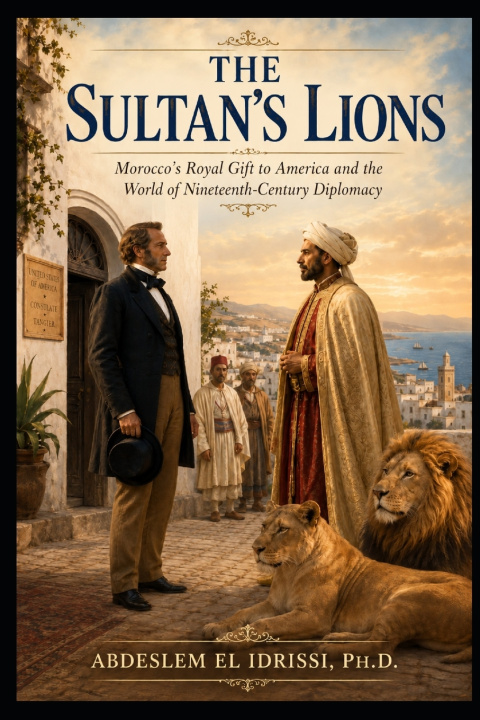
THE SULTAN'S LIONS
Morocco's Royal Gift to America and the World of Nineteenth-Century Diplomacy
 Engels
 25 b
25 b
 Nieuw
Nieuw
Tot 30 dagen retourrecht

A royal gift. A constitutional dilemma. A revealing chapter in the long history of Moroccan-American diplomacy.
In 1839, Sultan Abd al-Rahman of Morocco sent an extraordinary gift to the president of the United States: a lion and lioness. To the Moroccan court, the animals represented sovereign generosity, honor, and friendship. To the American consul in Tangier, they created an immediate problem. The United States Constitution restricted federal officials from accepting presents from foreign rulers without congressional consent, yet refusing the Sultan's gift risked causing a diplomatic insult.
The result was one of the most unusual episodes in the history of American diplomacy.
The Sultan's Lions reconstructs the remarkable journey of these animals from the Moroccan royal court to the American consulate in Tangier, across the Atlantic, and ultimately to public auction in Philadelphia. Along the way, their story draws in consuls, interpreters, presidents, Congress, merchants, sailors, and government officials struggling to reconcile two very different political traditions.
But the lions are only part of the story.
Abdeslem El Idrissi places their journey within the broader transformation of Moroccan-American relations during the nineteenth century. The book follows the survival of the friendship after the death of Sultan Sidi Mohammed ibn Abdallah, the growth of the American consular presence in Tangier, the renewal of the Moroccan-American treaty in 1836, and the increasingly difficult international environment created by European expansion in North Africa.
From the French conquest of Algeria and the bombardment of Tangier to the growth of foreign protection, commercial privilege, the Cape Spartel Convention, and the Madrid Conference of 1880, the world surrounding the old Moroccan-American relationship was changing rapidly. The United States did not pursue a colonial project in Morocco, but its diplomats operated within the same treaty system through which foreign rights, jurisdiction, and commercial privileges increasingly affected Moroccan sovereignty.
Drawing on diplomatic correspondence, presidential messages, congressional records, treaty texts, government accounts, newspapers, and modern historical scholarship, The Sultan's Lions reveals diplomacy not only as the work of treaties and formal declarations, but as the daily management of misunderstanding, ceremony, law, expense, personal judgment, and cultural difference.
The lions themselves eventually disappeared from the official record.
The relationship did not.
The Sultan's Lions is Volume III of Morocco and America: Stories from the Oldest Enduring Friendship in U.S. Foreign Relations, a six-volume series tracing Moroccan-American relations from the era of the American Revolution to the twenty-first century.


Informatie over het boek
Engels

Geef dit boek vandaag nog cadeau
Dat gaat heel eenvoudig
1 Voeg het boek toe aan je winkelwagentje en selecteer Als cadeau bezorgen 2 Je krijgt van ons per omgaand een voucher 3 Het boek wordt bezorgd op het adres van de ontvangerHoi! Ik ben Libroamiko, je boekadviseur.
Hoe kan ik je helpen?