
 Contact
 Hoe winkelen bij ons werkt
Bezorging
Winkelgids
 Engels
 61 b
61 b
Tot 30 dagen retourrecht
Klanten kochten ook





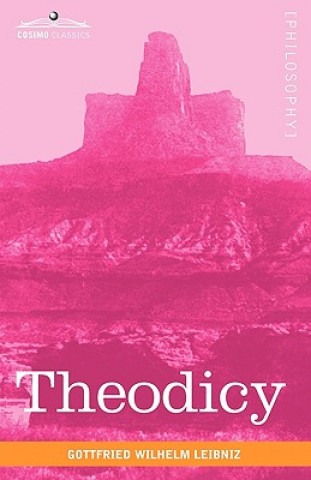
In this 1710 treatise, Gottfried Liebniz's only book-length work, he applies the idea of philosophical "optimism"-that we live in the best of all possible worlds-to the "problem of evil"-If a benevolent God exists, why do terrible things happen? He explores the possibility that humanity's happiness is not necessarily part of God's plan. Much of Leibniz's thinking in the realm of the sciences flowed from his philosophy-he believed the universe to operate under simple, intelligible, interconnected rules. Understanding how he approached the metaphysical world and humanity's place in it is vital to understanding his contributions to modern science. The impact of the work of German mathematician GOTTFRIED WILHELM LEIBNIZ (1646-1716) on modern science and technology is all but incalculable. His notation for infinitesimal calculus-which he developed independently of Newton-remains in use today, and his invention of binary counting is the basis for modern computing. He was a powerfully influential philosopher as well, and is still considered, alongside Descartes and Spinoza, one of the great 17th-century rationalists.


Informatie over het boek
Engels
Categorieën

Geef dit boek vandaag nog cadeau
Dat gaat heel eenvoudig
1 Voeg het boek toe aan je winkelwagentje en selecteer Als cadeau bezorgen 2 Je krijgt van ons per omgaand een voucher 3 Het boek wordt bezorgd op het adres van de ontvangerDit vind je misschien ook interessant

 /
/
 Gebonden (paperback)
 30.99
€
30.99
€


 /
Gebonden (paperback)
38.18
€
/
Gebonden (paperback)
38.18
€


 /
Gebonden (paperback)
9.41
€
/
Gebonden (paperback)
9.41
€




 /
Gebonden (harde band)
171.40
€
/
Gebonden (harde band)
171.40
€
 /
Gebonden (harde band)
34.13
€
/
Gebonden (harde band)
34.13
€


 /
Gebonden (harde band)
13.56
€
/
Gebonden (harde band)
13.56
€
 /
Gebonden (harde band)
30.79
€
/
Gebonden (harde band)
30.79
€




Hoi! Ik ben Libroamiko, je boekadviseur.
Hoe kan ik je helpen?