
 Contact
 Hoe winkelen bij ons werkt
Bezorging
Winkelgids
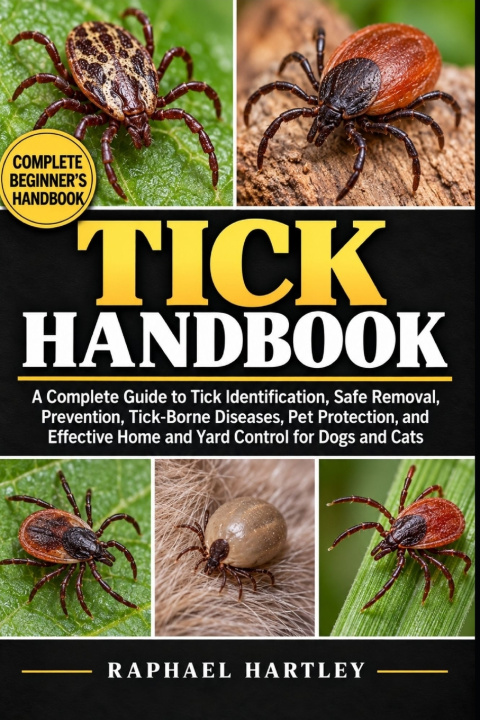
TICK HANDBOOK
A Complete Guide to Tick Identification, Safe Removal, Prevention, Tick-Borne Diseases, Pet Protection, and Effective Home and Yard Control for Dogs and Cats
 Engels
 43 b
43 b
 Wordt verwacht
 Nieuw
Nieuw
Tot 30 dagen retourrecht

Protect yourself, your family, and your pets by learning how to identify ticks, remove them correctly, reduce exposure, recognize potential health concerns, and create a practical prevention strategy for your home and yard.
TICK HANDBOOK is a comprehensive guide to tick identification, safe removal, prevention, tick-borne diseases, pet protection, and effective environmental control for dog and cat owners. Written for beginners, pet owners, families, outdoor enthusiasts, and anyone living in or traveling through tick-prone areas, Raphael Hartley turns a complicated subject into practical, easy-to-understand guidance.
Ticks are more than an unpleasant nuisance. These blood-feeding arachnids can attach to people and animals and may transmit disease-causing organisms. Understanding their life cycle, preferred habitats, host-seeking behavior, and correct removal methods can help you make better prevention decisions.
Inside this handbook, you'll discover:
• Tick anatomy, biology, life stages, feeding behavior, and host-seeking strategies
• How to recognize common tick groups and understand why accurate identification matters
• Differences between hard ticks and soft ticks
• How tick activity and exposure risks can vary with climate, season, habitat, and location
• Common places to check for ticks after outdoor activity
• Step-by-step principles for prompt and careful tick removal
• Why crushing, burning, coating, or aggressively twisting attached ticks can be inappropriate
• How to clean and monitor a bite area after removal
• When professional medical or veterinary advice may be appropriate
• Understanding major categories of tick-borne disease affecting people and animals
• Recognizing possible warning signs after a known or suspected tick exposure
• Why symptoms, disease risks, and recommended responses vary by geographic region
• Practical personal protection for hiking, gardening, camping, working outdoors, and other activities
• Clothing, repellents, tick checks, and other strategies for reducing exposure
• How to perform thorough tick checks on dogs and cats
• Common attachment sites to examine on pets
• Understanding veterinarian-recommended tick prevention options for companion animals
• Why products intended for dogs should never automatically be assumed safe for cats
• Keeping pet bedding, resting areas, and frequently used spaces cleaner
• Managing grass, leaf litter, vegetation, brush, and yard edges to reduce suitable tick habitat
• Creating practical landscape barriers and reducing wildlife-related exposure around homes
• Understanding when environmental treatment may be appropriate and why label directions matter
• Developing a household tick-prevention routine for people and pets
• Keeping useful records of bites, identification, symptoms, pet treatments, and exposure history
TICK HANDBOOK emphasizes prevention rather than fear. No single method provides complete protection, but combining personal precautions, routine tick checks, appropriate pet protection, landscape management, and informed monitoring can significantly improve your overall strategy.
The guide also stresses the importance of professional advice. Tick-borne diseases can be difficult to identify from symptoms alone, and recommendations differ by location, species, and individual circumstances. Medical professionals should evaluate human health concerns, while veterinarians should guide prevention and treatment decisions for pets.
Whether you are protecting an active dog, caring for cats, spending time outdoors, managing a tick-prone property, or simply wanting to understand these parasites better, this handbook provides a dependable foundation.
Identify ticks more confidently, remove them appropriately, protect your pets, reduce exposure around your property, and build a smarter approach to year-round tick prev


Informatie over het boek
Engels
Categorieën

Geef dit boek vandaag nog cadeau
Dat gaat heel eenvoudig
1 Voeg het boek toe aan je winkelwagentje en selecteer Als cadeau bezorgen 2 Je krijgt van ons per omgaand een voucher 3 Het boek wordt bezorgd op het adres van de ontvangerHoi! Ik ben Libroamiko, je boekadviseur.
Hoe kan ik je helpen?