
 Contact
 Hoe winkelen bij ons werkt
Bezorging
Winkelgids
 Engels
 472 b
472 b
Tot 30 dagen retourrecht
Klanten kochten ook








 /
/
 Gebonden (paperback)
 44.43
€
44.43
€













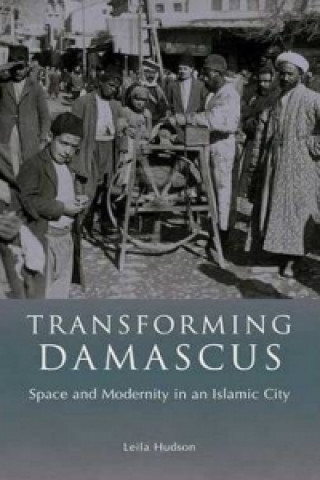
In 1860, Damascus was a sleepy provincial capital of the weakening Ottoman Empire, a city defined in terms of its relationship to the holy places of Islam in the Arabian Hijaz and its legacy of Islamic knowledge. Yet by 1918 Damascus had become a seat of Arab nationalism and a would-be modern state capital. How can this metamorphosis be explained? Here Leila Hudson describes the transformation of Damascus. Within a couple of generations the city changed from little more than a way-station on the Islamic pilgrimage routes that had defined the city's place for over a millennium. Its citizens and notables now seized the opportunities made available through transport technology on the eastern Mediterranean coast and in the European economy. Shifts in marriage patterns, class, education and power ensued. But just when the city's destiny seemed irrevocably linked to the Mediterranean world and economy, World War I literally starved the urban centre of Damascus and empowered its Bedouin hinterland. The consequences shaped Syria for the rest of the twentieth century and beyond.


Informatie over het boek
Engels

Geef dit boek vandaag nog cadeau
Dat gaat heel eenvoudig
1 Voeg het boek toe aan je winkelwagentje en selecteer Als cadeau bezorgen 2 Je krijgt van ons per omgaand een voucher 3 Het boek wordt bezorgd op het adres van de ontvangerDit vind je misschien ook interessant




 /
/
 Adobe ePub DRM
3.32
€
Adobe ePub DRM
3.32
€

 /
Gebonden (paperback)
33.53
€
/
Gebonden (paperback)
33.53
€
 /
Gebonden (paperback)
61.81
€
/
Gebonden (paperback)
61.81
€
 /
Gebonden (paperback)
25.04
€
/
Gebonden (paperback)
25.04
€

 /
Gebonden (paperback)
10.19
€
/
Gebonden (paperback)
10.19
€


 /
Gebonden (paperback)
34.13
€
/
Gebonden (paperback)
34.13
€
 /
Gebonden (paperback)
63.73
€
/
Gebonden (paperback)
63.73
€

 /
Gebonden (harde band)
41.40
€
/
Gebonden (harde band)
41.40
€


 /
Gebonden (harde band)
234.64
€
/
Gebonden (harde band)
234.64
€

Hoi! Ik ben Libroamiko, je boekadviseur.
Hoe kan ik je helpen?