
 Contact
 Hoe winkelen bij ons werkt
Bezorging
Winkelgids
 Engels
 245 b
245 b
Tot 30 dagen retourrecht
Klanten kochten ook

 /
/
 Gebonden (paperback)
 12.90
€
12.90
€
 /
Gebonden (paperback)
33.98
€
/
Gebonden (paperback)
33.98
€



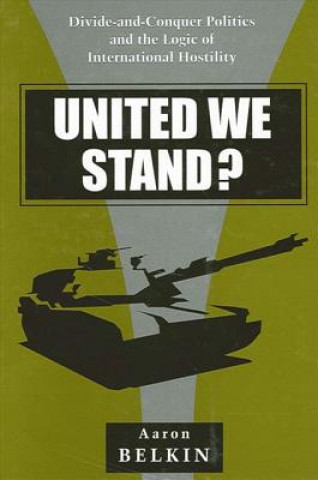
It has long been assumed that leaders engage in international conflict to unify their followers--" what is often called the "rally' round the flag" hypothesis. Despite its intuitive appeal, however, this hypothesis does not always provide a compelling explanation of the relationship between domestic politics and international conflict. In "United We Stand? Aaron Belkin shows that in one important realm, civil-military relations, leaders often prefer divisiveness over cohesion. When they feel domestically vulnerable, leaders use international conflict in order to create and exacerbate rivalries among their own military forces to lower the risk of a coup and to contribute to the consolidation and stability of the political order. Case studies include post-Soviet Georgia and Syria. "Belkin addresses an underexplained source of international conflict and does a persuasive job of turning widely accepted truisms on their heads. His basic argument is important, cleary presented, and well supported." --" Paul N. Stockton, coeditor of "Reconstituting America's Defense: The New U.S. National Security Strategy


Informatie over het boek
Engels

Geef dit boek vandaag nog cadeau
Dat gaat heel eenvoudig
1 Voeg het boek toe aan je winkelwagentje en selecteer Als cadeau bezorgen 2 Je krijgt van ons per omgaand een voucher 3 Het boek wordt bezorgd op het adres van de ontvangerDit vind je misschien ook interessant

 /
Gebonden (paperback)
16.63
€
/
Gebonden (paperback)
16.63
€












 /
Gebonden (harde band)
148.46
€
/
Gebonden (harde band)
148.46
€


Hoi! Ik ben Libroamiko, je boekadviseur.
Hoe kan ik je helpen?