
 Contact
 Hoe winkelen bij ons werkt
Bezorging
Winkelgids
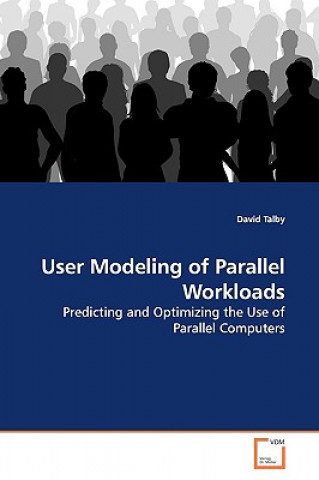
User Modeling of Parallel Workloads
Predicting and Optimizing the Use of Parallel Computers
 Engels
 149 b
149 b
Tot 30 dagen retourrecht
Klanten kochten ook









 /
/
 Gebonden (paperback)
 30.80
€
30.80
€




 /
Gebonden (paperback)
17.02
€
/
Gebonden (paperback)
17.02
€


The goal of workload modeling is to predict a §computer s workload well enough to design it §correctly. A poor model will lead to degraded §performance and user satisfaction. Analyzing logs §from multiple real parallel computers uncovers §several statistical features locality of sampling, §daily cycles, weekly cycles, self similarity and §flurries that are missing from current workload §models. Their practical importance is demonstrated §by two new kinds of scheduling algorithms adaptive §scheduling and shortest job backfill first §scheduling which achieve an average 10% bottom-§line performance gain and 35% stability gain on the §production workloads.§§The second part of this book presents a user based §workload model. It identifies four stable user types §and five stable session types. It then deduces model §parameters, the distributions of the arrival and §activity patterns for both users and sessions, their §dependencies and temporal structure. The methodology §and statistical toolset is explained to make it §easier to reuse in other domains.§§The insights and practical advice provided will be §of use to anyone building or operating a large-scale §parallel computer.


Informatie over het boek
Engels
Categorieën

Geef dit boek vandaag nog cadeau
Dat gaat heel eenvoudig
1 Voeg het boek toe aan je winkelwagentje en selecteer Als cadeau bezorgen 2 Je krijgt van ons per omgaand een voucher 3 Het boek wordt bezorgd op het adres van de ontvangerDit vind je misschien ook interessant





 /
Leporello (harmonicaboek)
7.69
€
/
Leporello (harmonicaboek)
7.69
€


 /
Gebonden (harde band)
51.57
€
/
Gebonden (harde band)
51.57
€

 /
Gebonden (paperback)
13.06
€
/
Gebonden (paperback)
13.06
€










Hoi! Ik ben Libroamiko, je boekadviseur.
Hoe kan ik je helpen?