
 Contact
 Hoe winkelen bij ons werkt
Bezorging
Winkelgids
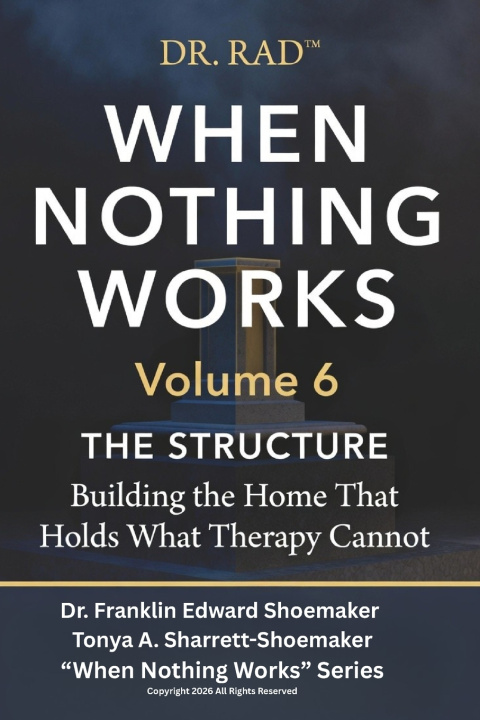
WHEN NOTHING WORKS Volume 6
THE STRUCTURE Building the Home That Holds What Therapy Cannot
 Engels
 70 b
70 b
 Wordt verwacht
 Nieuw
Nieuw
Tot 30 dagen retourrecht

This note is different from the ones that came before it.
Previous volumes asked you to look. At the storm. At the architecture underneath it. At the loop that runs inside the storm, with its entry points and its escalation ladder and its pseudo-resolutions and its fuel. At what the child needs, neurobiologically and relationally. At yourself - the depleted caregiver, the grief-holder, the one who needed to be rebuilt before anything else could change. Volume 5 asked you to do the hardest thing any parent in this situation ever does: to stop, to name your own depletion, and to begin the deliberate reconstruction of your own nervous system so that you could return to this work with something left to offer.
You did that. If you are here, in Volume 6, you did that. That is not a small thing. In clinical terms, it is the hardest thing. Most parents of children with reactive attachment disorder, oppositional defiant disorder, complex developmental trauma, and the full range of behavioral presentations this series has named - most of them never get here. They cycle. They exhaust. They outsource. They surrender the therapeutic role to professionals who, however skilled, see the child for one hour a week in a controlled clinical setting and cannot reach the nervous system the way the primary caregiver can, in the home, in the daily accumulated rhythm of a life lived together.


Informatie over het boek
Engels

Geef dit boek vandaag nog cadeau
Dat gaat heel eenvoudig
1 Voeg het boek toe aan je winkelwagentje en selecteer Als cadeau bezorgen 2 Je krijgt van ons per omgaand een voucher 3 Het boek wordt bezorgd op het adres van de ontvangerHoi! Ik ben Libroamiko, je boekadviseur.
Hoe kan ik je helpen?