
 Contact
 Hoe winkelen bij ons werkt
Bezorging
Winkelgids
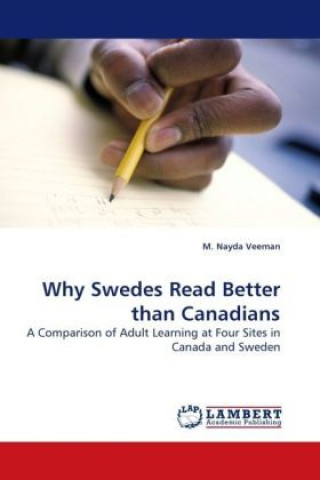
Why Swedes Read Better than Canadians
A Comparison of Adult Learning at Four Sites in Canada and Sweden
 Engels
 106 b
106 b
Tot 30 dagen retourrecht
Klanten kochten ook


 /
/
 Gebonden (harde band)
 128.90
€
128.90
€




 /
Gebonden (paperback)
43.87
€
/
Gebonden (paperback)
43.87
€







 /
Gebonden (paperback)
49.65
€
/
Gebonden (paperback)
49.65
€



In 1995 the International Adult Literacy Survey provided a benchmark of literacy skills in seven industrialised countries. It found that Swedish literacy skills were significantly higher than those in Canada. To understand factors that might account for this difference, this qualitative case study compared adult learning in rural and urban sites in Canada and Sweden. The New Literacy Studies provided a critical perspective for comparing adult literacy as contextual rather than as a technical, pedagogical skill. A conceptual framework based on situated literacy and comprising policy-in-intent, policy-in-practice and policy-in-experience guided a multi-method approach. There were substantive differences between the two countries in the provision of and access to adult education at the macro-level but at the micro-level, individuals shared similar goals and issues. Swedes with the least education had priority access to formal education whereas Canadians with the least education often had to rely on the volunteer sector. Other social policies in Sweden also facilitated participation in adult education.


Informatie over het boek
Engels

Geef dit boek vandaag nog cadeau
Dat gaat heel eenvoudig
1 Voeg het boek toe aan je winkelwagentje en selecteer Als cadeau bezorgen 2 Je krijgt van ons per omgaand een voucher 3 Het boek wordt bezorgd op het adres van de ontvangerDit vind je misschien ook interessant
 /
Gebonden (paperback)
64.14
€
/
Gebonden (paperback)
64.14
€
 /
Gebonden (paperback)
44.58
€
/
Gebonden (paperback)
44.58
€

 /
Gebonden (paperback)
12.56
€
/
Gebonden (paperback)
12.56
€



 /
Gebonden (paperback)
10.33
€
/
Gebonden (paperback)
10.33
€




 /
Gebonden (paperback)
53.40
€
/
Gebonden (paperback)
53.40
€








 /
Gebonden (paperback)
71.03
€
/
Gebonden (paperback)
71.03
€