
 Contact
 Hoe winkelen bij ons werkt
Bezorging
Winkelgids
World Brain
 Engels
 51 b
51 b
Retourneren binnen 30 dagen
Klanten kochten ook






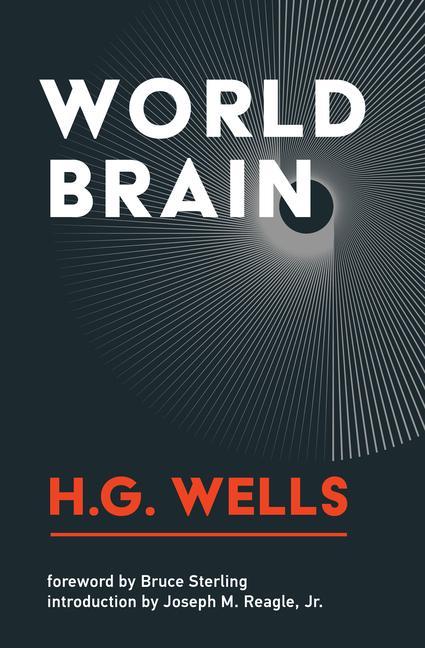
In 1937, H. G. Wells proposed a predigital, freely available World Encyclopedia to represent a civilization-saving World Brain.In a series of talks and essays in 1937, H. G. Wells proselytized for what he called a "World Brain," as manifested in a World Encyclopedia--a repository of scientifically established knowledge--that would spread enlightenment around the world and lead to world peace. Wells, known to readers today as the author of The War of the Worlds and other science fiction classics, was imagining something like a predigital Wikipedia. The World Encyclopedia would provide a summary of verified reality (in about forty volumes); it would be widely available, free of copyright, and utilize the latest technology. Of course, as Bruce Sterling points out in the foreword to this edition of Wells's work, the World Brain didn't happen; the internet did. And yet, Wells anticipated aspects of the internet, envisioning the World Brain as a technical system of networked knowledge (in Sterling's words, a "hypothetical super-gadget"). Wells's optimism about the power of information might strike readers today as naïvely utopian, but possibly also inspirational.


Informatie over het boek
Engels

Geef dit boek vandaag nog cadeau
Dat gaat heel eenvoudig
1 Voeg het boek toe aan je winkelwagentje en selecteer Als cadeau bezorgen 2 Je krijgt van ons per omgaand een voucher 3 Het boek wordt bezorgd op het adres van de ontvangerDit vind je misschien ook interessant







 /
/
 Gebonden (paperback)
 8.19
€
8.19
€



 /
Gebonden (harde band)
12.85
€
/
Gebonden (harde band)
12.85
€







Hoi! Ik ben Libroamiko, je boekadviseur.
Hoe kan ik je helpen?