
 Contact
 Hoe winkelen bij ons werkt
Bezorging
Winkelgids
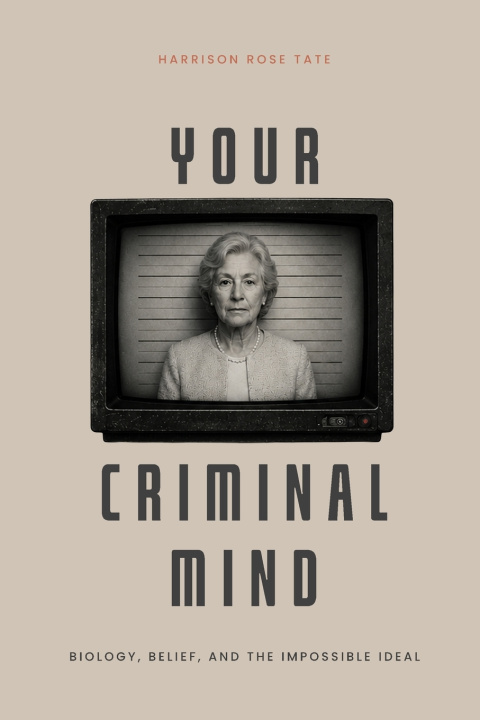
Your Criminal Mind
 Engels
 54 b
54 b
 Nieuw
Nieuw
Tot 30 dagen retourrecht

A STANDARD THAT
APPLIES ONLY SOMETIMES
IS NOT MUCH OF A
STANDARD AT ALL
Why do some people do terrible things?
Why do good people hurt the people they love?
Why do I keep making the same mistakes?
Why is someone I care about so difficult to understand?
Ever wonder why these questions continue to elude us, despite all our advances in psychology, neurology, artificial intelligence and philosophy?
As a society, we've all been holding the same sledgehammer for centuries, sensing that we are standing on a metaphorical bedrock, Underneath it are answers we have sought since Socrates' days. To crack it open, we first have to let go of the assumption that there is a consistent "why."
There is not, and has never been, a single, context- independent explanation for human behavior. We don't look out our window in the dead of winter and wonder why it isn't summer. Conditions change.
A profound, anti-reductionist, and interdisciplinary look at the mind, morality, behavioral dysregulation, cultural misreadings of behavior, and our notion of harm as epistemically unstable. Your Criminal Mind explores humanity from the perspective that human variability is the rule rather than the exception. Drawing on neuroscience, psychology, philosophy, criminology, and everyday observation, Harrison Rose Tate considers what happens to traditional ideas of responsibility when access to reason, inhibition, perspective, and self-control fluctuates across circumstances and over time.
Central to the book is the concept of the Greyline, a state in which reactive processes become disproportionately active while reflective and regulatory capacities become less accessible. Tate uses this framework to examine behavior ranging from ordinary interpersonal conflict and anxiety to addiction, parenting, leadership, criminal conduct, and institutional decision-making.
The book distinguishes momentary capacity from longitudinal accountability, arguing that reduced regulatory access in a particular moment does not eliminate responsibility for the patterns people recognize, reinforce, manage, or neglect across time. It also considers how families, workplaces, institutions, and cultures shape the conditions under which regulation becomes easier or more difficult.
Rather than proposing a new neurological mechanism, Your Criminal Mind integrates established observations about state-dependent cognition, regulation, agency, environment, and behavior into a framework for reconsidering morality and accountability. It asks whether systems built around an ideal of stable, continuously rational human agency can adequately account for the way people actually behave.


Informatie over het boek
Engels

Geef dit boek vandaag nog cadeau
Dat gaat heel eenvoudig
1 Voeg het boek toe aan je winkelwagentje en selecteer Als cadeau bezorgen 2 Je krijgt van ons per omgaand een voucher 3 Het boek wordt bezorgd op het adres van de ontvangerHoi! Ik ben Libroamiko, je boekadviseur.
Hoe kan ik je helpen?