
 Contact
 Hoe winkelen bij ons werkt
Bezorging
Winkelgids
Contritio
 Duits
Duits
 74 b
74 b
Klanten kochten ook




 /
/
 Gebonden (paperback)
 11.33
€
11.33
€


 /
Gebonden (paperback)
23.49
€
/
Gebonden (paperback)
23.49
€







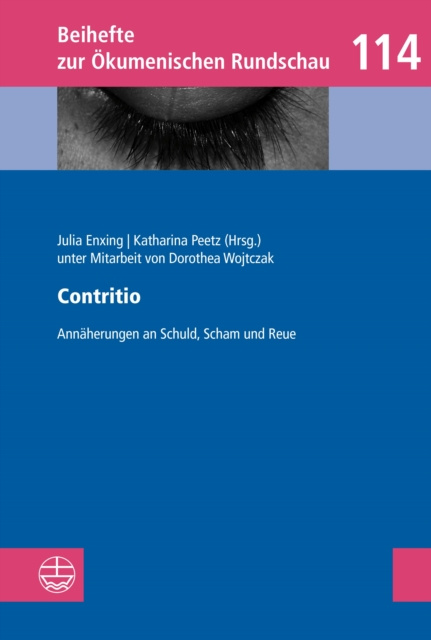
Wer soll sich (fur was) schamen? Wer definiert, was Schuld ist? Gibt es kollektive Schuld und wer tragt hier die Verantwortung? Wer ist Opfer und Tater? Was ist Reue? Wer soll (was) bereuen? Die Beitrage reflektieren Scham, Schuld und Reue sowohl hinsichtlich ihrer individuellen als auch hinsichtlich ihrer gemeinschaftlichen Wirkkraft. Die Ambivalenz, Kontroversitat und Komplexitat der Diskursfelder spiegelt sich dabei in der Vielfaltigkeit der Positionen und Zugange der Autorinnen und Autoren wider. So wird deutlich, dass Scham destruktiv und produktiv, Schuld individuell und kollektiv, Reue selbstbezogen und prozesshaft sein konnen. Sie werden zugleich unter den Aspekten von Verantwortung, Gemeinschaft und in Bezug auf das Spannungsverhaltnis von Heiligkeit und Sundigkeit in der Kirche in den Blick genommen. Der Band umfasst 13 Beitrge von christlichen Autorinnen und Autoren aus der westlichen Hemisphre. Die Mehrzahl von ihnen gehrt dem DFG-Netzwerk "e;Schuld ErTragen. Die Kirche und ihre Schuld"e; an. Mit dem Aufgreifen der Schamthematik und ihrer Relevanz fr Reue und Schuldbearbeitungsprozesse, verortet er sich in einem aktuellen systematisch-theologischen Diskurs. Mit Beitrgen von Michael Beintker, Julia Enxing, Sndor Fazakas, Brian P. Flanagan, Dominik Gautier, John J. Grogan, Stephan Jtte, Katharina von Kellenbach, Britta Konz, Jutta Koslowski, Ulrike Link-Wieczorek, Ashley Null, Katharina Peetz. [Contritio. Approaches to Guilt, Shame, and Remorse]Who is supposed to feel ashamed (and for what)? Who defines guilt? Does collective guilt exist and who bears its responsibility? Who are victims or perpetrators? What constitutes remorse? Who is required to repent (and for what)? The essays collected here reflect on shame, guilt, and remorse as individual as well as communal phenomena. The ambivalence, contradictions, and complexities of these terms become apparent in the multiplicity of positions and approaches taken by different authors. They reveal that shame is both destructive and productive, guilt can be individual and collective, and remorse is self-referential and process-oriented. These terms are seen as aspects of responsibility and community, as well as within the dynamic to sinfulness and sanctity within the church. The volume consists of 13 essays by Christian authors from the Western hemisphere. The majority belong to the scholarly network "e;Bearing Guilt: The Church and Its Guilt"e; which is funded by the German Research Foundation (DFG). By taking up the topic of shame with its relevance for remorse and the process to overcome guilt, this book belongs within current systematic-theological discourse.


Informatie over het boek
Duits

Geef dit boek vandaag nog cadeau
Dat gaat heel eenvoudig
1 Voeg het boek toe aan je winkelwagentje en selecteer Als cadeau bezorgen 2 Je krijgt van ons per omgaand een voucher 3 Het boek wordt bezorgd op het adres van de ontvangerDit vind je misschien ook interessant

Hoi! Ik ben Libroamiko, je boekadviseur.
Hoe kan ik je helpen?