
 Contact
 Hoe winkelen bij ons werkt

Bezorging
Winkelgids
 Engels
 139 b
 Wordt voor Kerst bezorgd ▾
Op voorraad
Onmiddellijk te downloaden
Dit vind je misschien ook interessant
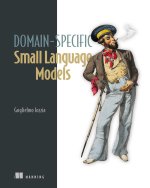


Get the eBook free when you register your print book at Manning.When you need a language model to respond accurately and quickly about a specific field of knowledge, the sprawling capacity of a LLM may hurt more than it helps. This book teaches you to build generative AI models optimized for specific fields. Perfect for cost- or hardware-constrained environments, Small Language Models (SLMs) train on domain specific data for high-quality results in specific tasks. In this book youll develop SLMs that can generate everything from Python code to protein structures and antibody sequencesall on commodity hardware. In Domain-Specific Small Language Models youll discover: Model sizing best practices Open source libraries, frameworks, utilities and runtimes Fine-tuning techniques for custom datasets Hugging Faces libraries for SLMs Running SLMs on commodity hardware Model optimization or quantization Foreword by Matthew R. Versaggi. About the technology Small-footprint language models trained on custom data sets and hosted locally can perform as well as large generalist models in speed and accuracy, often at a fraction of the cost. Domain-Specific Small Language Models shows you how to build privacy-preserving and regulation-compliant SLMs for agentic systems, specialist applications, and deployment on the edge. About the book This is a practical book that shows you how to adapt pretrained open source models to your domain using transfer learning and parameter-efficient fine-tuning. Youll learn to minimize cost through optimization and quantization, develop secure APIs to serve your models, and deploy SLMs on commodity hardwareincluding small devices. The hands-on examples include integrating SLMs into RAG systems and agentic workflows. What's inside ONNX and other quantization methods Integrate SLMs into end-to-end applications Deploy SLMs on laptops, smartphones, and other devices About the reader For AI engineers familiar with Python. About the author Guglielmo Iozzia is a Director of AI and Applied Mathematics at Merck & Co. and a Distinguished Member of the American Society for Artificial Intelligence. He specializes in AI biomedical applications. The technical editor on this book was Riccardo Mattivi. Table of Contents Part 1 1 Small language models Part 2 2 Tuning for a specific domain 3 End-to-end transformer fine-tuning 4 Running inference 5 Exploring ONNX 6 Quantizing for your production environment Part 3 7 Generating Python code 8 Generating protein structures Part 4 9 Advanced quantization techniques 10 Profiling insights 11 Deployment and serving 12 Running on your laptop 13 Creating end-to-end LLM applications 14 Advanced components for LLM applications 15 Test-time compute and small language models


Informatie over het boek
Engels
Categorieën

Geef dit boek vandaag nog cadeau
Dat gaat heel eenvoudig
1 Voeg het boek toe aan je winkelwagentje en selecteer Als cadeau bezorgen 2 Je krijgt van ons per omgaand een voucher 3 Het boek wordt bezorgd op het adres van de ontvangerHoi! Ik ben Libroamiko, je boekadviseur.
Hoe kan ik je helpen?